Core Capabilities
AI Brain & Self Driving Labs
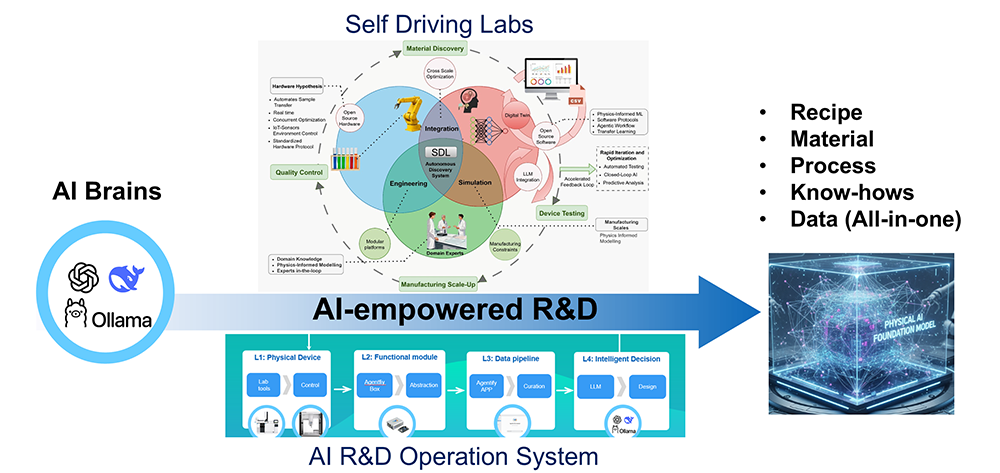
At the core of the AI for Materials initiative is an AI orchestration layer that translates research goals into coordinated discovery workflows.
The system integrates insights from literature, simulations, experiments, and optimisation algorithms into a continuous design–test–learn cycle. Given a high-level objective — such as reducing defects in a thin film or improving material performance — the AI brain plans the required steps, applies scientific and operational constraints, and identifies the next experiments to run.
It integrates modular AI tools for knowledge retrieval, modelling, and data analysis, while coordinating execution across laboratory instruments and sensing platforms.
By combining AI reasoning with automated experimentation, the AI brain enables faster, more systematic materials discovery from concept to validated prototype.
Modular Simulation
Our algorithm stack is designed as a set of modular services rather than a single monolithic model, allowing different AI capabilities to be combined based on the research problem.
This architecture enables the same algorithm families to be reused across diverse domains — from semiconductors and energy materials to soft materials and field sensing.
Core services include knowledge retrieval and databases, digital twin simulations, multimodal data analysis, and optimisation algorithms. These are exposed as interchangeable APIs that the AI brain can compose dynamically to build scenario-specific workflows.
By separating algorithms into modular components, this initiative creates a flexible and scalable foundation for AI-driven materials discovery across multiple application areas.
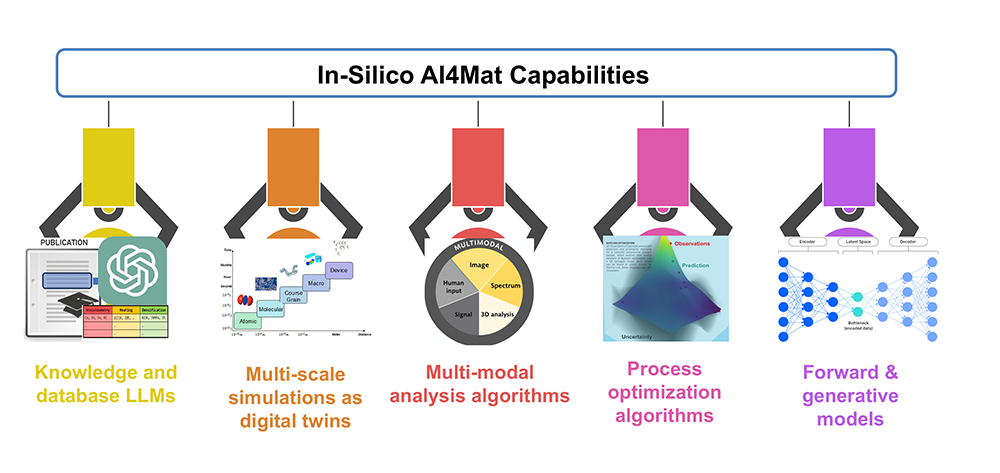
Our five core in-silico capabilities, from knowledge- and database-LLMs through to forward and generative models, form the modular building blocks that underpin AI-driven materials discovery at NTU.
AI Simulation
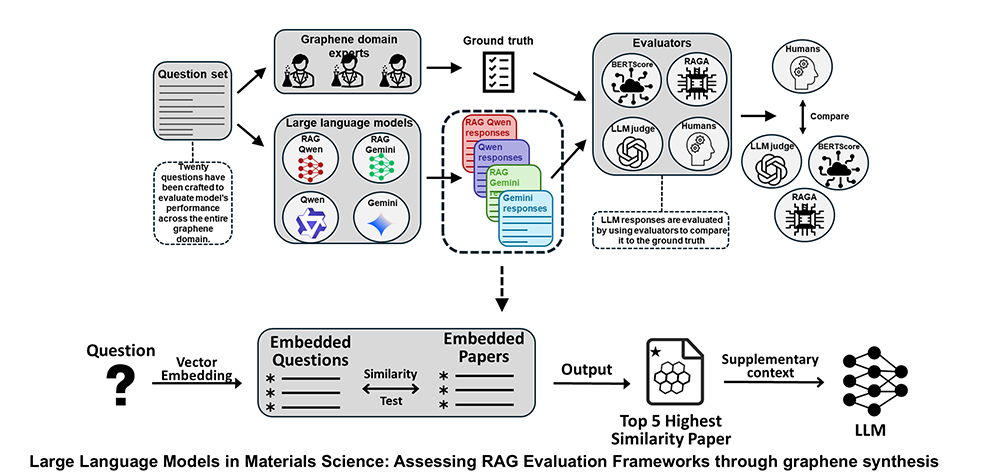
Our RAG framework embeds domain questions against a curated materials science corpus, retrieving the most relevant literature to ground LLM responses — illustrated here through a graphene synthesis case study.
Modular Robotics and Equipments
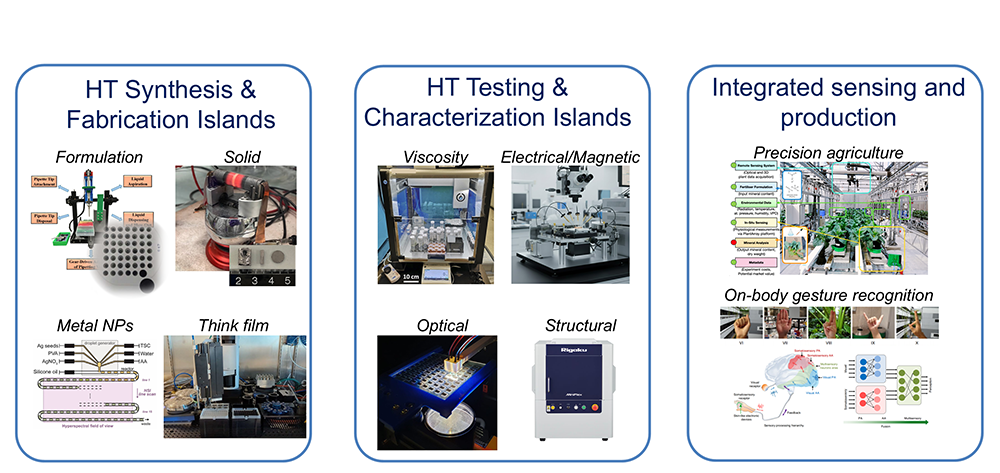
Our physical laboratory infrastructure spans high-throughput synthesis and fabrication islands, multimodal characterisation platforms, and integrated sensing and production environments — forming the real-world experimental backbone that the AI brain orchestrates in a closed-loop discovery cycle.
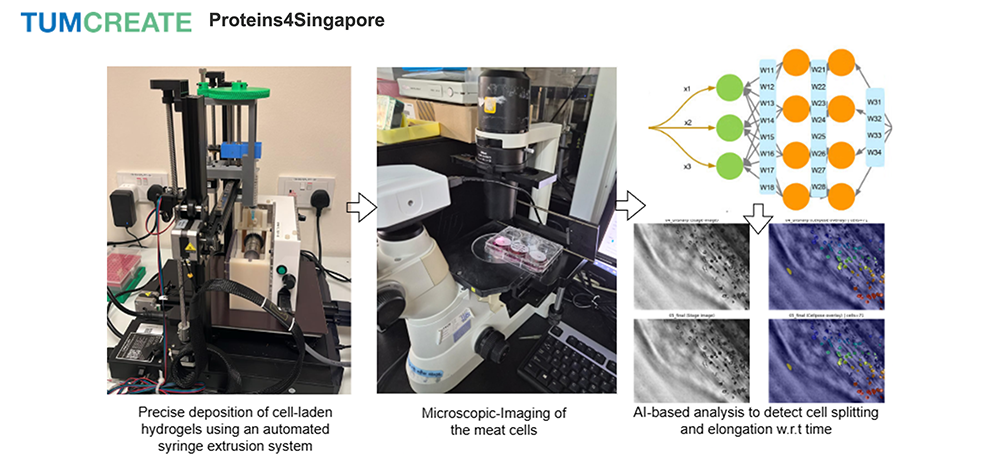
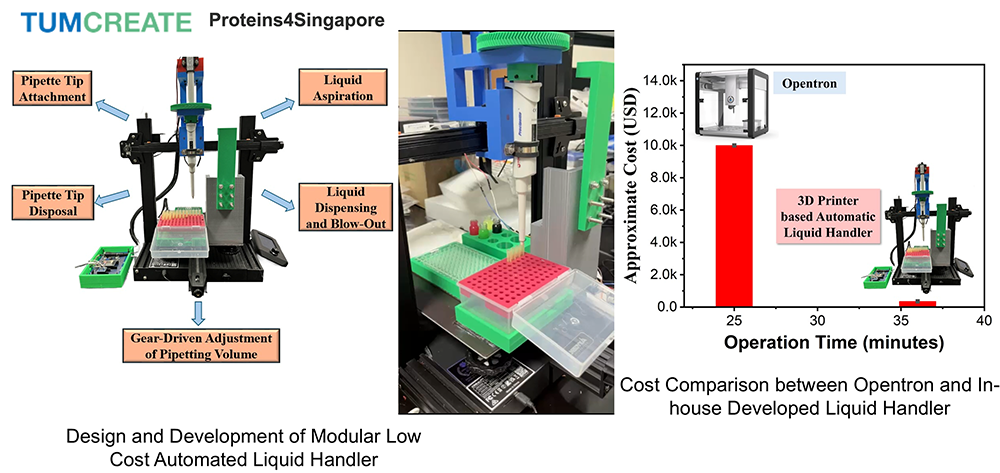
Automated SDL workflows for cultivated meat research, developed in collaboration with TUMCreate under the Proteins4Singapore programme — encompassing precision cell-laden hydrogel deposition, AI-assisted microscopic analysis of cell splitting and elongation, and a low-cost modular liquid handler that substantially reduces operational cost compared to commercial alternatives.