About Us
The AI for Materials Initiative - Leveraging AI to turn materials into scenario‑ready solutions
We are a demand‑anchored, capabilities‑driven engineering validation hub that combines two capabilities:
- Closed‑loop material discovery for inorganics, soft materials, energy materials, and thin films;
- Applied AI for smart sensing, defect localisation and failure analysis, optimisation, and decision support in real scenarios such as semiconductors, solar and clean energy, materials under service, soft materials/health, and precision agriculture.
Built on NTU MSE’s AI computational infrastructure, experimental platforms, and Agentify‑style middleware, AI for Materials initiative turns the macro‑opportunities of AI-for-science and RIE2030 into concrete, reusable capabilities and workflows.
The AI for Materials initiative takes promising materials and SDL components and demonstrates their direct application in scenarios, producing validated workflows, datasets, and applied‑AI tools usable by R&D teams and early‑stage manufacturers.
Our Positioning within Singapore’s Ecosystem
Building true AI leadership for materials in Singapore requires complementary roles across the ecosystem rather than competing initiatives.
We operate alongside programmes advancing materials discovery and autonomous experimentation platforms. Its focus is on demonstrating how these capabilities can be integrated into practical workflows and real-world applications.
By translating advances in materials science and AI into deployable tools, datasets, and workflows, the AI for Materials initiative helps make these innovations usable by R&D teams and early-stage manufacturers.
The AI for Materials initiative bridges advances in materials discovery and self-driving laboratory infrastructure to scenario-ready workflows, working alongside partners such as I-FIM (Institute for Functional Intelligent Materials, National University of Singapore) and Singapore AI for Science Initiative, and enabling downstream large‑scale manufacturing and deployment.
Applied Materials
Device Integration
Recipe Optimisation
New Physics
New Concept
Material Demo
Self Driving Labs
Atomistic hardware
Robotics
Our Mission
End-to-End Material by Design
We accelerate end-to-end Materials-by-Design by integrating AI-enabled multi-scale prediction with autonomous, high-throughput synthesis and characterisation — rapidly converging on materials and process windows that meet real engineering constraints and enable device-level deployment.
Scenario-Specific Applied AI
We develop deployment-oriented AI workflows that transform real measurements — from images and spectra to electrical and field data — into actionable outputs, enabling scenario-validated materials, optimised process windows, and decision-ready engineering solutions.
Organisation and Key Personnel
Assoc Prof Kedar Hippalgaonkar
School of Materials Science and Engineering [email protected]Associate Professor Kedar Hippalgaonkar’s research interests are in AI-driven solid-state materials-by-design. He holds a joint appointment as an associate professor with the Materials Science and Engineering Department at NTU, and as a Principal Sci ...
Appointments:
Associate Professor, School of Materials Science & Engineering
Keywords: Artificial and Augmented Intelligence | Electronic, Optical and Magnetic Materials | Nanomaterials and Nanotechnology | Physics | Semiconductor Nanocrystals and Devices
Asst Prof Ng Wei Tat, Leonard
School of Materials Science and Engineering [email protected]Leonard Ng Wei Tat is an Assistant Professor at the School of Materials Science & Engineering at Nanyang Technological University (NTU). His research now focuses on data-driven techniques for roll-to-roll printed flexible electronics, in particul ...
Appointments:
Assistant Professor, School of Materials Science & Engineering
Keywords: Additive and Advanced Manufacturing | Artificial and Augmented Intelligence | Biomedical Informatics and Data Science | Nanomaterials and Nanotechnology | Smart Cities | Surfaces, Coatings and Films
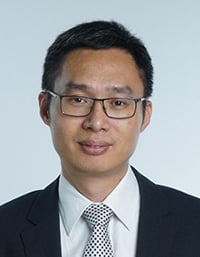
Prof. Chen Xiaodong: A President’s Chair Professor and Fellow of the Royal Society, he is a global authority on mechanotransductive materials and bio-interfaces. He pioneered "pro-interface" science to integrate soft materials with digital systems for artificial sensing and human-machine interfaces.
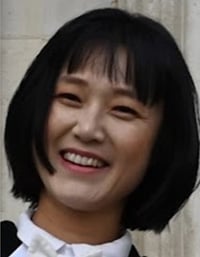
Dr. Feng Xiaolei: Focuses on the intersection of condensed matter physics and earth sciences. Her work utilises advanced computational modelling to understand material behaviour under extreme environments, providing the theoretical foundations for AI-driven property prediction.
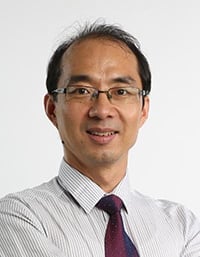
Prof. Li Shuzhou: An expert in theoretical chemistry and plasmonics, he develops computational frameworks to simulate light-matter interactions. His research provides critical data for training ML models to design catalysts and nanostructured optical materials.
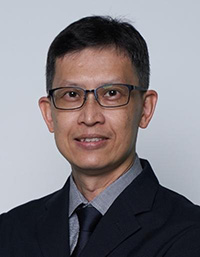
Prof. Ng Kee Woei: An Academician of the Asia Pacific Academy of Materials, he specialises in sustainable biomaterials and nanotoxicology. In the realms of applied AI, he leads efforts in developing data analytics tools to understand correlations of environmental inputs to crop growth outcomes for sustainable agriculture, focusing on nutrient delivery and growing media innovations.
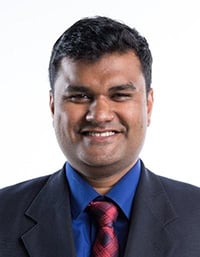
Prof. Nripan Mathews: A Provost's Chair in MSE, he is a pioneer in halide perovskites for solar energy and next-generation electronics. His work bridges the gap between material synthesis and device application through printed and flexible electronic architectures.
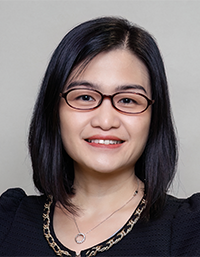
Prof. Lydia Wong: Recognised for her work in semiconductor nanostructures and chalcogenide materials. Her research utilises AI workflows to navigate the complex process windows of thin-film solar cells and semitransparent energy-harvesting coatings.
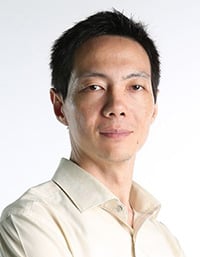
Prof. Yan Qingyu (Alex Yan): A highly cited researcher in electrochemical energy storage and thermoelectrics. He focuses on the development of high-performance battery materials and electrocatalysts, leveraging high-throughput characterisation data for material optimisation.
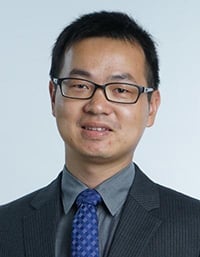
Prof. Liu Zheng: Recipient of the APEC ASPIRE prize, he is a leader in the synthesis of 2D materials beyond graphene. His expertise in large-scale synthesis of transition metal dichalcogenides (TMDs) provides the high-quality datasets essential for AI-enabled electronics discovery.
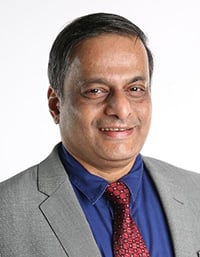
Prof. Raju V. Ramanujan: A specialist in magnetic materials and thermodynamics, his research spans additive manufacturing and smart composites. He applies data-driven methods to optimise magnetic properties for refrigeration and biomedical applications.
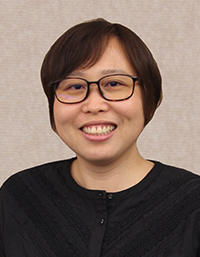
Assist. Prof. Wu Dongshuang: A Nanyang Assistant Professor specialising in catalysis and structural engineering. Her work focuses on using advanced spectroscopy and AI to decode structure-property relationships in materials for renewable energy and environmental remediation.