

Second Sustainability Lecture: Urbanisation: Problem or Panacea for the Planet?
Abstract
Urbanisation is rapidly transforming the global environment. What are the implications for planetary sustainability? Drawing on the latest science, this talk will discuss how contemporary urbanisation is driving changes in climate, the loss of agricultural land, and the demand for raw materials.
About the Speaker:
Karen C. SetoFrederick C. Hixon Professor of Geography and Urbanisation Science; Director of the Hixon Center for Urban Sustainability; Co-Director of the Yale Center for Geospatial Solutions
/karen-seto-dir-2023.png?sfvrsn=ee217a80_1)
Karen Seto is the Frederick C. Hixon Professor of Geography and Urbanisation Science at the Yale School of the Environment. She is one of the world's leading experts on urbanisation and its effects on the planet, including climate change, biodiversity, and food systems. A geographer and urbanisation scientist, she integrates remote sensing, field interviews, and modeling methods to focus on four research themes: 1) measuring and characterizing urbanisation; 2) modeling and understanding the drivers of urban expansion; 3) forecasting urban expansion; and 4) assessing the environmental consequences of urbanisation. She is an expert in satellite remote sensing analysis and has pioneered methods to reconstruct historical urban land-use. Her research developed the first forecasts of urban land expansion globally. She has extensive fieldwork experience in Asia, especially China and India, where she has conducted research for over 20 and 10 years, respectively.
Professor Seto serves on numerous national and international scientific bodies. She is chair of the Policy and Global Affairs Division of the U.S. National Academies and co-chair of the U.S. National Academies Climate Security Roundtable, established by the direction of Congress to help better understand and anticipate the ways climate change affects U.S. national security interests. She was the Coordinating Lead Author for two UN climate change reports, the IPCC 5th (2014) and 6th (2022) Assessment Reports, where she co-led the chapters on how urban areas can mitigate climate change.
Professor Seto is committed to improving public understanding of an urbanizing planet. She was the Executive Producer of “10,000 Shovels: Rapid Urban Growth in China,” a documentary film that integrates satellite imagery, historical photographs, and contemporary film footage to highlight the urban changes occurring in China. Her book, City Unseen, co-authored with Meredith Reba (YSE MEM '14), uses satellite imagery to show how cities shape landscapes and how landscapes shape cities.
Professor Seto has received many awards for her scientific contributions, including the Outstanding Contributions to Remote Sensing Research Award from the American Association of Geographers. She is an elected member of the U.S. National Academy of Sciences, the American Academy of Arts and Sciences, and the Connecticut Academy of Science and Engineering. She is also a Foreign Academician of the Chinese Academy of Sciences, an elected lifetime member of the Council on Foreign Relations and a Fellow of the American Association for the Advancement of Science. She holds a PhD in Geography from Boston University.
Panel Discussion: Sustainable Urban Futures: Science, Nature, and Investment
Sustainable Urban Futures: Science, Nature, and Investment
Abstract:
Cities are central to the future of the planet, yet their growth poses complex challenges for environmental sustainability, social wellbeing, and economic development. This panel explores how scientific evidence, nature-based approaches, and responsible investment can work together to shape urban environments that are resilient and inclusive. The discussion will consider the role of ecological design in enhancing urban livability, the cultural and social dimensions of sustainability, and how industry and policy can support long-term, climate-conscious development. Moderated to encourage a cross-disciplinary exchange, the session invites reflection on how we might build cities that benefit both people and the planet.
/sustainability-lecture-2025---holding-slide.jpg?sfvrsn=3a938476_1)
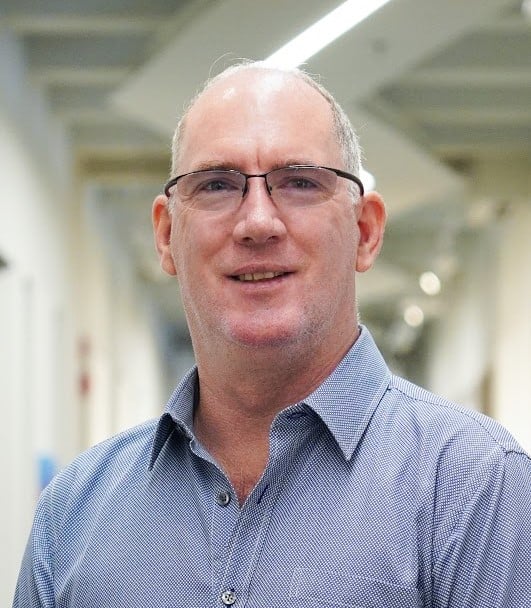 Prof Adam Switzer, is a coastal scientist with more than two decades of academic and applied experience, Prof Switzer’s research focuses on tsunamis, storms, sea-level change, and the long-term impacts of climate on coastal environments and communities. His work has taken him across Asia and the Pacific, where he has collaborated with governments, international organisations, and industry partners to strengthen disaster preparedness, climate adaptation, and coastal resilience. Prof Switzer has published widely in leading scientific journals and serves on international advisory panels related to coastal hazards and sustainability. At NTU, he has held leadership positions that include Assistant Dean (Development) and Director of CIFAL Singapore. Through his leadership at CIFAL Singapore, Prof Switzer is committed to advancing education and training in sustainability, disaster risk reduction, and sustainable cities and communities, with a strong focus on equipping future leaders to address global challenges through interdisciplinary approaches.
 Associate Professor Lee Ser Huay Janice Teresa is an environmental scientist at the Asian School of the Environment and the Earth Observatory of Singapore, Nanyang Technological University (NTU). She leads the Coupled Human and Natural Systems Lab, where her research examines the interactions between people, land use, and ecosystems, with a focus on tropical Southeast Asia. Her work spans agricultural expansion, biodiversity conservation, peatland restoration, and climate-related risks to food systems and livelihoods.
With a PhD in Environmental Sciences from ETH Zurich and postdoctoral experience at ETH Zurich and Princeton University, Assoc Prof Lee brings international expertise in conservation science, land-use change, and sustainability policy. She has published widely in leading journals and works closely with regional and global partners on issues of food security, sustainable agro-commodities, and land management.
At NTU, she plays an active role in teaching, mentoring, and leadership, including the development of interdisciplinary courses on coupled human–natural systems and her service as Assistant Chair (Student Life) at the School. Through her research and education initiatives, she is committed to advancing knowledge and training that contribute to sustainable and resilient futures for communities and ecosystems.
/emmaramsay_headshot_2024.jpeg?sfvrsn=4888b99_1) Dr Emma Ramsay is a Lee Kuan Yew Postdoctoral Fellow at Nanyang Technological University, Singapore. Her research focuses on urban heat stress and climate adaptation. Working closely with decision-makers and local communities, she leads several collaborative research projects which aim to enhance climate resilience in Southeast Asian cities. She is a Lead Author on the Intergovernmental Panel on Climate Change (IPCC) Special Report on Climate Change and Cities. Prior to joining NTU, Emma earned her PhD at Monash University, Australia where she investigated climate-health challenges in urban informal settlements.
Dr Emma Ramsay is a Lee Kuan Yew Postdoctoral Fellow at Nanyang Technological University, Singapore. Her research focuses on urban heat stress and climate adaptation. Working closely with decision-makers and local communities, she leads several collaborative research projects which aim to enhance climate resilience in Southeast Asian cities. She is a Lead Author on the Intergovernmental Panel on Climate Change (IPCC) Special Report on Climate Change and Cities. Prior to joining NTU, Emma earned her PhD at Monash University, Australia where she investigated climate-health challenges in urban informal settlements.
/sharon-baptist.jpg?sfvrsn=5661c928_1) Ms Sharon Baptist: Besides being a qualified Architect since 2000, Sharon is also a certified Sustainability Reporting Specialist of the Global Reporting Initiative, and a qualified Green House Gas Practitioner in Quantifying the Carbon Footprint of Products and Demonstrating Carbon Neutrality. She is additionally an SMC-accredited mediator and a certified Lead Auditor for Quality, Environment, Health and Safety ISO systems with the International Register of Certified Auditors.
Ms Sharon Baptist: Besides being a qualified Architect since 2000, Sharon is also a certified Sustainability Reporting Specialist of the Global Reporting Initiative, and a qualified Green House Gas Practitioner in Quantifying the Carbon Footprint of Products and Demonstrating Carbon Neutrality. She is additionally an SMC-accredited mediator and a certified Lead Auditor for Quality, Environment, Health and Safety ISO systems with the International Register of Certified Auditors.
At Mapletree, Sharon leads sustainability and innovation initiatives across all global development projects. She has over 29 years of experience in design, construction, sustainability and business operations. She is committed to advancing sustainability within the built environment, recognising its pivotal role in shaping inclusive and future-ready cities.
Sharon advocates for the integration of sustainable design, innovative technologies, and circular principles to reduce environmental impact while enhancing liveability. She is passionate about driving collaborative efforts that transform buildings into catalysts for climate action and long-term value creation.
21 November 2025
12:30pm - 2:30pm
HSS Auditorium, NTU




















/16-oct-2025-afternoon-1.jpg?sfvrsn=e9cdd60b_1)
.jpg?sfvrsn=cfde9c58_1)
.jpg?sfvrsn=36923c99_1)
/nvidia-logo.png?sfvrsn=e4f65148_1)
/lkc-roleplay.png?sfvrsn=6a387dba_1)

Related stories