
Calming and Revitalizing Practices
Mindfulness Exercises
Mayo Clinic:
For those who want to practice on their own, the Mayo Clinic provides instructions on mindfulness exercises, such as sitting meditation, which can be done with or without an audio aid.
Mindfulness Exercises Website
This website features a broad selection of mindfulness exercises, including more than 2,000 free meditations, worksheets, videos, and e-books. Resources range from short meditations to more in-depth online courses like the 28-day mindfulness challenge or 10-day Vipassana course.
University of California, San Diego Center for Mindfulness
The University of California, San Diego, hosts free live events and guided mediation sessions ranging from 20 minutes to an hour. Check out their vast collection of recordings on Soundcloud.
Handpan Music:
The musician Malte Marten has released popular compilations of handpan music on YouTube, which is valued for its emotional depth and peaceful tone
Chair Yoga Exercises
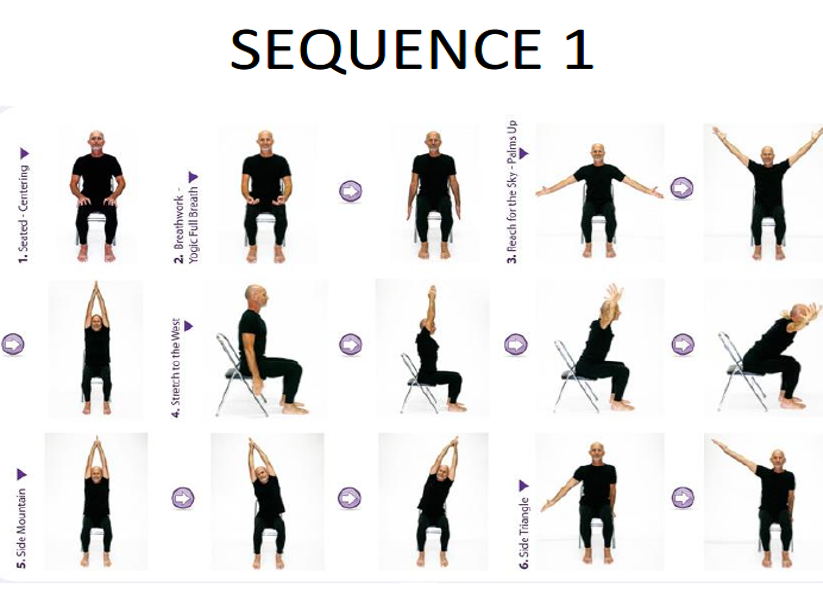
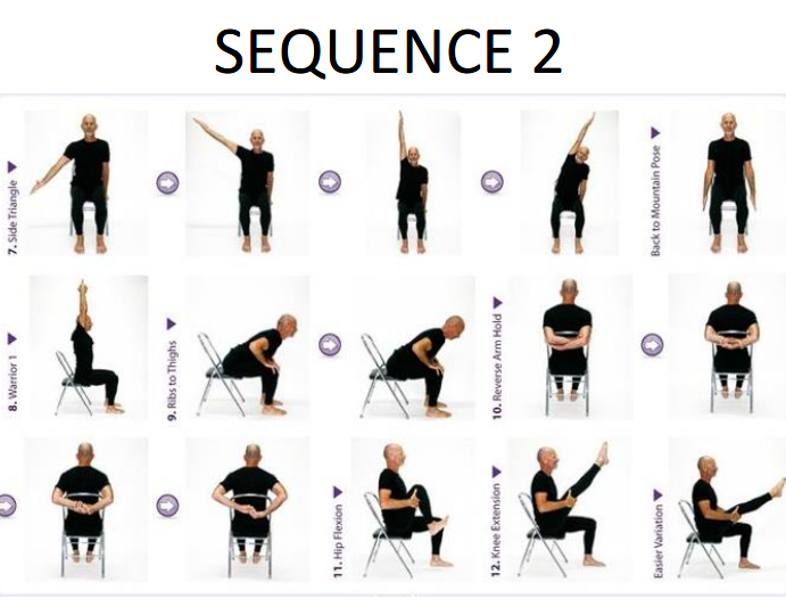
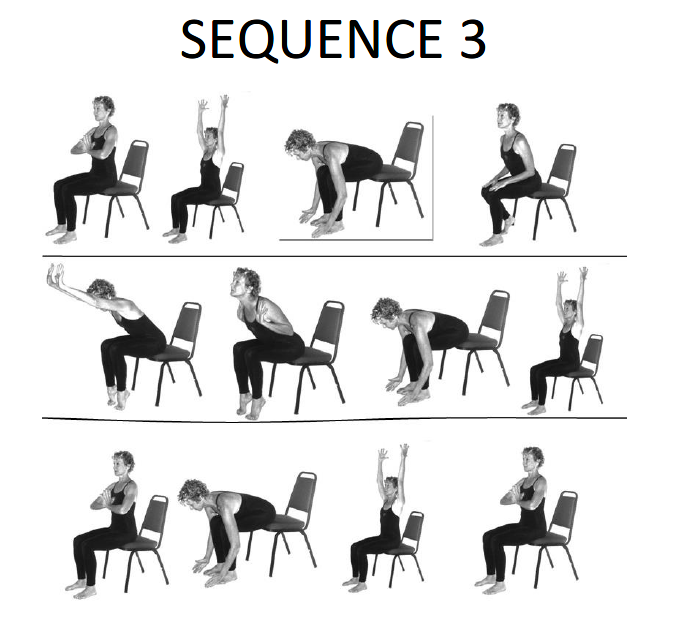
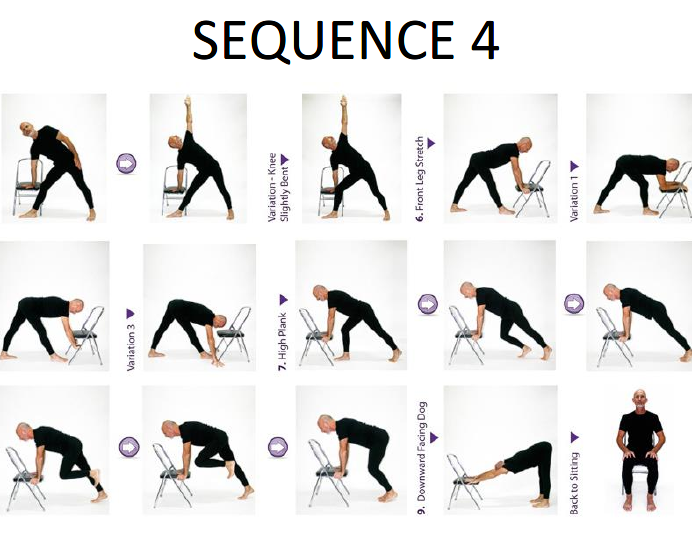
Calming and Relaxation Exercises
This is a simple technique used by Navy SEALs to regain focus and stay calm in high-stress situations.
- Exhale slowly, emptying your lungs.
- Inhale through your nose for a slow count of four.
- Hold your breath for a count of four.
- Exhale slowly through your mouth for a count of four.
- Hold your breath for a count of four before inhaling again.
- Repeat the cycle for several minutes.
- 4-7-8 breathing
This yogic breathing exercise is known for promoting relaxation and helping with sleep
Developed by Dr. Andrew Weil
- Exhale completely through your mouth, making a "whoosh" sound.
- Inhale silently through your nose for a count of four.
- Hold your breath for a count of seven.
- Exhale completely through your mouth, making the "whoosh" sound, for a count of eight.
- Repeat the cycle up to four times.
- Coherent (or resonant) breathing
This technique involves adjusting your breathing to a smooth, slow rhythm, typically around 5 to 6 breaths per minute
- Sit or lie in a comfortable position, and place one hand on your stomach.
- Inhale slowly through your nose for a count of five.
- Exhale slowly through your mouth for a count of five.
- Continue this smooth, even rhythm for several minutes.
- Diaphragmatic (belly) breathing
This practice helps engage the diaphragm, the primary muscle for breathing, promoting a deeper, more relaxing breath
- Lie on your back with your knees bent, or sit with your back supported.
- Place one hand on your upper chest and the other on your belly, below your rib cage.
- Inhale slowly through your nose, allowing your belly to rise as the diaphragm contracts. The hand on your chest should remain still.
- Exhale slowly through your mouth. Your stomach should move inward. The hand on your chest should remain still.
- Repeat for 5 to 10 minutes, or as long as comfortable.
Balancing and Centering Exercises
This ancient yogic technique helps to calm the nervous system and balance the mind.
- Sit in a comfortable position with your spine straight.
- Bring your right hand to your nose, pressing your index and middle fingers down toward your palm.
- Close your right nostril with your thumb and inhale slowly through your left nostril.
- Close your left nostril with your ring finger. Release your thumb and exhale through the right nostril.
- Inhale through the right nostril.
- Close the right nostril with your thumb. Release your ring finger and exhale through the left nostril.
- Continue this pattern for 5 to 10 rounds.
This simple technique is often used to combat stress and anxiety by activating the parasympathetic nervous system.
- Breathe in and out naturally for a few moments to find your normal rhythm.
- Gradually increase the length of your exhalation, aiming for it to be slightly longer than your inhalation.
- Continue at a comfortable ratio. For example, if you inhale for a count of 4, exhale for a count of 6.
- Soften the sound of your breath to a gentle sigh.
- Repeat the pattern for several minutes.
Energizing and Clearing Exercises
Skull-shining breath (Kapalabhati Pranayama)
This invigorating breath is believed to clear the air passages and build energy.
- Sit comfortably with a straight spine.
- Take a brief, passive inhale through both nostrils.
- Sharply and quickly exhale through your nose, pulling your navel in toward your spine.
- Allow the inhale to happen naturally after each exhalation.
- Repeat the quick, sharp exhalations for up to 30 repetitions, then rest and breathe normally before starting another round
Lion's breath (Simhasana)
This exercise is used to release tension in the face and throat.
- Kneel comfortably on the floor or sit in a chair with a tall spine.
- Inhale deeply through your nose.
- Exhale forcefully through your mouth while sticking out your tongue and making a "haaa" sound.