
MS4631: Corrosion Engineering
| Academic Units | 3 |
| Semester | 1 |
| Pre-requisite(s) | Nil |
| Co-requisite(s) | Nil |
Course Instructors
 Associate Professor Huang Yizhong Associate Professor Huang Yizhong | 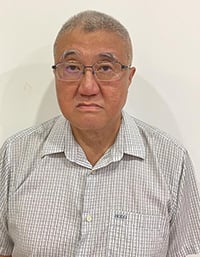 Dr Bryan Stephen Wong Dr Bryan Stephen Wong |
Course AIMS
The main objectives are:
- To understand the aspects of practical corrosion problems and solutions, the corrosion behaviour of engineering materials, and the methods and techniques for testing and monitoring of corrosion.
- To learn the basic principles of non-destructive methods and their similarities difference, capabilities, limitations and applications in the detection of corrosion-related defects.
Intended Learning Outcomes
By the end of this course, you (as a student) would be able to:
- Understand and differentiate different non-destructive methods.
- Select an appropriate non-destructive method for a particular requirement.
- Analyze corrosion problems of industry.
- Apply appropriate techni ques for testing and monitoring corrosion.
- Select appropriate material and technology for a given application.
Course Content
Corrosion in various materials; Corrosion in various environments; Corrosion prevention technologies; Corrosion Testing and Monitoring Techniques – Destructive and Non-destructive testing
Reading and References
Suggested reading:
Prescribed Texts:
- Electrochemistry by Carl Hamann, et. al., 2ed ed. Wiley-VCH press 2007.
- M. G. Fontana, Corrosion Engineering, 3rd edition, McGraw-Hill, 1987.
- D. A. Jones, Principles and Prevention of Corrosion, 2nd Edition, Prentice-Hall, 1996
Recommended references:
- Principles and Prevention of Corrosion by Denny Jones, 2nd ed., Prentice-Hall
- Corrosion Engineering by Mars G. Fontana, 3rd ed.
- NACE Corrosion Engineer’s Reference Book by R. Baboian, 3rd ed, NACE Press.