
MS3012: Micro/ Nanoelectronic Materials Processing
| Academic Units | 3 |
| Semester | Both |
| Pre-requisite(s) | Nil |
| Co-requisite(s) | Nil |
Course Instructors
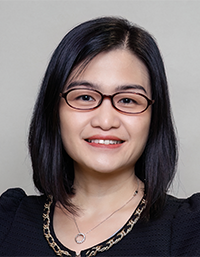 Professor Lydia Helena Wong Professor Lydia Helena Wong |  Professor Nripan Mathews Professor Nripan Mathews |
Course AIMS
This course is an introduction to advanced materials processing, with focus on micro/nano-electronics. It is essential for those of you who desire to specialize in microelectronics device fabrication. It also serves as a pre-requisite for the more advanced microelectronics elective modules offered in their fourth year.
This subject includes an introduction to fundamental semiconductor operation and device physics. The course covers the basics of semiconductor technology, from bare silicon to finished prod ucts. The process steps include bulk crystal growth, oxidation, diffusion, ion implantation, thin film deposition, lithography and etching. Factors that affect the materials’ properties from the process steps will be highlighted. New materials that are inc orporated into the state-of-the-art semiconductor processes are also discussed. Advanced techniques in lithography and film deposition are introduced, as well as advanced novel devices.
Intended Learning Outcomes
By the end of this course, you (as a student) would be able to:
- Calculate carrier resistivity, conductivity and carrier concentration of a doped semiconductor.
- Explain how doping concentration affects resistivity, conductivity, carrier mobility in Silicon.
- Explain the purpose of typical silicon wafer manufacturing processes, including thermal oxidation, diffusion, ion implantation, physical/chemical vapor deposition, photolithography and etching processes.
- Determine specific process parameters such as: thermal oxide thickness, junction depth, surface concentration, thin film thickness etc.
- Determine the mask thickness to block implantation ions.
- Evaluate and determine the best process to deposit oxide of various thickness and dimensions.
- Evaluate and determine the best process for doping Silicon at the source drain, n-well, p-well, etc.
- Calculate the parameters associated with etching based on etch selectivity, rates and anisotropy
- Correlate how the parameters of the deposition process (eg. Pressure, temperature, ion energy) affects film uniformity and quality both from a qualitative and quantitative point of view.
- Choose the type of photolithography process flows based on the context provided.
- Evaluate the various deposition techniques to choose the appropriate processes based on the material deposited as well as the desired quality.
- Explain the dependencies that affect resolution and related parameters in optical lithography systems.
Course Content
- Microelectronics Technology Overview.
- Overview of semiconductor Device Physics.
- Diffusion and Thermal Oxidation.
- Ion Implantation.
- Chemical and Physical Thin Film Deposition.
- Patterning, Lithography.
Reading and References
Textbooks:
- J. D. Plummer, M. D. Deal and P. B. Griffin, Silicon VLSI Technology, 2000, Prentice Hall.
- S. M. Sze, Semiconductor Devices (Physics and Technology), John Wiley & Sons,2002,2nd edition
References:
- S. Campbell, The Science & Engineering of Microelectronic Fabrication, 1996, Oxford
- S. M. Sze, VLSI Technology, VLSI Technology, 1988, McGraw Hill.
- Y. Chang and S. M. Sze, ULSI Technology, 1996, McGraw Hill.
- S. K. Ghandhi, VLSI Fabrication Principles, 1994, John Wiley.
- H. H. Lee, Fundamentals of Microelectronics Processing, 1990, McGraw Hill.