FlexiMasters in Artificial Intelligence Fundamentals
The FlexiMasters in Artificial Intelligence Fundamentals is suitable for learners with a STEM background who want to learn about the concepts and techniques that are used in the development of the latest Artificial Intelligence (AI) technologies.
Upon completion of the programme, learners will gain a strong understanding of fundamental concepts in machine learning, deep learning, mathematics for AI, and AI ethics, providing a strong foundation for developing AI technologies and engineering solutions.
This programme prepares AI professionals for advanced roles across industries. Learners who meet the minimum requirements will be able to pursue the Master of Science (MSc) in Artificial Intelligence from NTU's College of Computing and Data Science (CCDS), to professionally upskill in support of their career advancement.
At the end of the course, learners will be able to:
- Built a strong foundation in Machine Learning, Deep Learning, Computer Vision, and AI Mathematics.
- Develop AI solutions guided by ethical and responsible AI practices.
- Gain practical skills for designing and implementing real world AI applications.
- Prepare for advanced AI roles across diverse industries.
- Gain the skills to build and deploy practical machine learning based computer vision solutions.
- The programme consists of five courses worth a total of 15 Academic Units (AUs).
- Assessment(s) will be conducted during every course and learners will be graded based on their performance in the assessment(s).
- As the micro-credential courses are only offered in this FlexiMasters in Artificial Intelligence Fundamentals programme, learners are required to enrol into this programme and complete all required courses within this programme.
- Mode of class delivery: Classroom.
Upon successful completion, the following qualifications will be awarded:
- A Graduate Certificate will be awarded to learners attaining 6 AUs, with a minimum Grade Point of 2.5 (which is equivalent to a letter grade of C+) achieved for each course.
- A FlexiMasters will be awarded to learners attaining 15 AUs, and achieving a minimum Grade Point of 2.5 (which is equivalent to a letter grade of C+) for each course.
Pathway to the Master's programme:
Credits earned are valid for 5 years for transfer of credits to the MSc in Artificial Intelligence. The minimum Grade Point eligible for transfer of credits to MSc in Artificial Intelligence is 2.5 (which is equivalent to a letter grade of C+). Transfer of credits is by application and the application will be assessed and approved by the University in accordance with University Credits Transfer and Course Exemption Policy.
To meet the requirement of SkillsFuture Singapore, assessment(s) will be conducted during every course.
The assessment(s) include:
1. Introduction to Artificial Intelligence (AI) and AI Ethics
- Development Project
- Quizzes
- Design Project
2. Machine Learning: Methodologies and Applications
- Assignment
- Project & Report
- Quiz
3. Deep Learning and Applications
- Project
- Quiz
4. Mathematics for Artificial Intelligence
- Quizzes
5. Computer Vision
- Written Assignment
- Project
- Quiz
This FlexiMasters programme is suitable for learners with a STEM background who want to learn about the concepts and techniques that are used in the development of the latest Artificial Intelligence (AI) technologies.
As the micro-credential courses are only offered in this FlexiMasters in Artificial Intelligence Fundamentals programme, learners are required to enrol into this programme and complete all required courses within this programme.
Note: Shortlisting will be conducted.
| Course title | Objective |
|---|---|
 Introduction to Artificial Intelligence (AI) and AI Ethics | This course introduces the basics of Artificial Intelligence (AI) and on ethical considerations and societal impact. It offers an interdisciplinary overview of AI and Learners will explore key AI concepts, paradigms, and computational problem-solving techniques, as well as advanced topics such as agentic AI, applied expert systems, and machine learning. Learning integrating theory with practical example, learners will be equipped with foundational skills to structure problems, assess AI solutions and apply AI techniques responsibly in real word contexts by the end of the course. At the end of the course, learners will be able to:
|
 Machine Learning: Methodologies and Applications | This course provides a practical introduction to machine learning, covering key concepts in supervised, unsupervised, and reinforcement learning. Learners will understand the notations and formulations of machine learning problems and gain hands-on experience applying loss functions using widely used Python libraries such as SciKit Learn and SciPy. The course emphasises both theory and application, helping learners evaluate the motivations behind machine learning models and interpret insights from real world scenarios. By the end of the course, learners will be equipped with foundational skills to structure problems, implement solutions, and critically assess machine learning approaches for diverse applications. At the end of the course, learners will be able to:
|
 Deep Learning and Applications | This course equips learners with a deep understanding of modern neural network architectures, including Convolutional Neural Networks (CNNs), Residual Networks, and Transformer Networks, while exploring the design principles behind them. Learners will learn to design and refine advanced deep learning techniques, evaluate performance using rigorous research-based metrics, and apply mathematical analysis to interpret network behaviour. The course emphasises practical skills in hyperparameter tuning and heuristic optimisation for achieving optimal performance. By the end of the course, learners will be prepared to build, analyse, and optimise cutting edge neural architectures for real world applications in AI and machine learning. At the end of the course, learners will be able to:
|
 Mathematics for Artificial Intelligence | This course provides learners with the essential mathematical foundations for understanding and applying Artificial Intelligence (AI) and Machine Learning techniques. Covering key topics in Linear Algebra and Calculus, learners will learn to solve matrix equations, compute derivatives, and apply vector decompositions, skills that underpin AI model design and optimisation. By the end of the course, learners will be equipped to confidently apply mathematical reasoning to AI problems, support model development and optimisation, and translate these techniques into real world projects and industry relevant AI solutions. At the end of the course, learners will be able to:
|
 Computer Vision | This course introduces the core principles of machine learning based computer vision, focusing on image analytics and technologies for detection, recognition, and classification tasks. Learners will explore the mathematical foundations underpinning these techniques and gain practical experience through case studies and real-world projects. The curriculum covers essential algorithms, feature extraction, and model design strategies for building effective vision systems. By the end of the course, learners will be equipped to design and implement machine learning based computer vision solutions to address diverse real-world challenges in areas such as object detection, image recognition, and automated classification. At the end of the course, learners will be able to:
|
Venue: NTU Main Campus
Date: Coming Soon
Listed courses are:
- Credit-bearing and stackable to Graduate Certificate in Artificial Intelligence Fundamentals (6 AU), FlexiMasters in Artificial Intelligence Fundamentals (15 AU) and MSc in Artificial Intelligence (30 AU).
Note: NTU reserves the right to change the date, venue, and mode of delivery due to unforeseen circumstances.
 | These courses are part of:
Learners will receive their Statement of Accomplishment (for a grade of D and above) or Certificate of Participation for each course—dependent upon their assessment performance. |
Programme Fee: S$31,610.00 (inclusive of GST)
| BEFORE funding & GST | AFTER SSG funding (if eligible under various schemes) & 9% GST | |||
| SSG Funding Support | Programme Fee | Course Fee | Programme Fee Payable | Course Fee Payable |
Singapore Citizen (SC) and Permanent Resident (PR) (Up to 70% funding) | $29,000.00 | $5,800.00 | Pending SSG approval | Pending SSG approval |
| Enhanced Training Support for SMEs (ETSS) | $29,000.00 | $5,800.00 | Pending SSG approval | Pending SSG approval |
Singapore Citizen aged ≥ 40 years old SkillsFuture Mid-career Enhanced Subsidy (MCES) (Up to 90% funding) | $29,000.00 | $5,800.00 | Pending SSG approval | Pending SSG approval |
- NTU/NIE alumni may utilise their $1,600 Alumni Course Credits for each course. Click here for more information.
- Learners can utilise their SkillsFuture Credits for these courses.
- Singaporeans aged 40 years and above are able to use their SkillsFuture Credit (Mid-Career) top-up of $4,000 to offset the course fees after SSG funding.
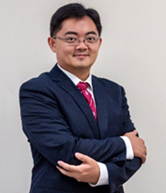 Associate Professor Yu Han | Assoc Prof Yu Han is an Associate Professor at the College of Computing and Data Science (CCDS), NTU. Between 2018 and 2024, he served as a Nanyang Assistant Professor (NAP) in CCDS, NTU. He has been a Visiting Scholar at the Department of Computer Science and Engineering, Hong Kong University of Science and Technology (HKUST) from 2017 to 2018. Between 2015 and 2018, he held the prestigious Lee Kuan Yew Post-Doctoral Fellowship (LKY PDF) at the Joint NTU-UBC Research Centre of Excellence in Active Living for the Elderly (LILY). Before joining NTU, he worked as an Embedded Software Engineer at Hewlett-Packard (HP) Pte Ltd, Singapore. Assoc Prof Yu specialises in trustworthy federated learning and is experienced in deploying various AI solutions to the industry. His contributions to the field of trustworthy AI and real-world impact have earned him recognition as one of the World's Top 2% Scientists in AI, and selected as one of the JCI Ten Outstanding Young Persons (TOYP) of Singapore.
|
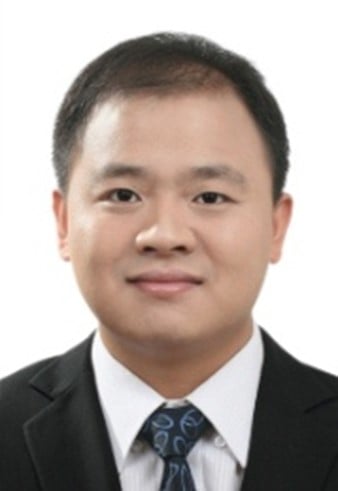 Professor Bo An Professor Bo AnInstructor for: Introduction to Artificial Intelligence (AI) and AI Ethics | Professor Bo An is a President's Chair Professor and Head of Division of Artificial Intelligence at the College of Computing and Data Science of the Nanyang Technological University (NTU). He is also Director for Centre of AI-for-X of NTU. He was a Nanyang Assistant Professor during 2014-2018. He received his Ph.D degree in Computer Science from the University of Massachusetts, Amherst. Prof Bo An research interests include artificial intelligence, multi-agent systems, computational game theory, reinforcement learning, automated negotiation, and optimization.He was named to IEEE Intelligent Systems' "AI's 10 to Watch" list for 2018.
|
 Dr. Kwok Sai Hang Dr. Kwok Sai HangInstructor for: Introduction to Artificial Intelligence (AI) and AI Ethics | Dr. Kwok Sai Hang is adjunct lecturer, former CLASS postdoctoral fellow at Nanyang Technological University. He earned his PhD in Philosophy (2017), Mphil in Philosophy (2013), and BA in Mathematics (2011) from the Hong Kong University of Science and Technology. He is now teaching for the Bachelor of Art in Philosophy and Master of Science in Artificial Intelligence program. His research and teaching focus on phenomenology, intercultural philosophy, and philosophy of science and technology, including logic and AI ethics. |
 Professor Zhang Hanwang Professor Zhang Hanwang Instructor for: Machine Learning: Methodologies and Applications | Prof Zhang Hanwang is a faculty at the College of Computing and Data Science (CCDS), NTU. He has received the B.Eng (Hons.) degree in computer science from Zhejiang University, Hangzhou, China, in 2009, and the Ph.D. degree in computer science from the National University of Singapore in 2014. He was a research scientist at the Department of Computer Science, Columbia University, USA and a senior research fellow at the School of Computing, National University of Singapore, Singapore. His research interests include computer vision, multimedia, and social media. |
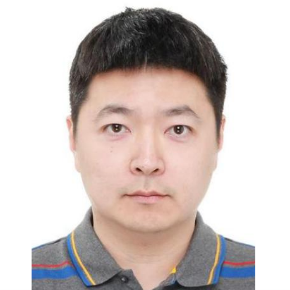 Associate Professor Li Boyang Albert Associate Professor Li Boyang AlbertInstructor for: Deep Learning and Applications | Assoc Prof Li Boyang Albert is a Nanyang Associate Professor at the College of Computing & Data Science (CCDS), Nanyang Technological University. Before joining CCDS, he held a visiting position at the Alibaba-NTU Singapore Joint Research Institute. Prior to that, he was a Senior Research Scientist at Baidu Research USA from 2018 to 2019, and a Research Scientist and Group Leader at Disney Research Pittsburgh from 2015 to 2017. He received his Ph.D. degree in Computer Science from Georgia Institute of Technology in 2014, and his B.Eng. degree from Nanyang Technological University in 2008. He published more than 45 peer-reviewed papers in top-tier journals and conferences and holds two US patents. |
 Associate Professor Kong Wai Kin Adams Associate Professor Kong Wai Kin Adams Instructor for: Mathematics for Artificial Intelligence | Assoc Prof Kong Wai Kin Adams is an Associate Professor at the College of Computing & Data Science (CCDS), Nanyang Technological University. and the current director of Master of Science in Artificial Intelligence programme. He received the Ph.D. degree from the University of Waterloo. He is listed in Stanford University's Top 2% Scientists’ Study. His recent research interests include pattern recognition, deep learning and their applications on power systems, healthcare, and biometrics. |
 Associate Professor Lu Shijian Associate Professor Lu ShijianInstructor for: Computer Vision | Assoc Prof Lu Shijian is an Associate Professor at the College of Computing & Data Science (CCDS), Nanyang Technological University. He received the Ph.D. degree received his PhD in electrical and computer engineering from the National University of Singapore. Before joining NTU, he took a number of leadership roles in the Institute for Infocomm Research (I2R), under the Agency for Science, Technology, and Research (A*STAR) in Singapore, including Head of Visual Attention Lab, Deputy Head of Satellite Department, Co-Chair of the Image and Pervasive Access Laboratory. His major research interests include image and video analytics, visual intelligence, and machine learning. |