
FlexiMasters in Game Design, Art and Technology
This FlexiMasters in Game Design, Art and Technology will provide cross-skill upgrading for those with digital art skills or computer science skills who are aspiring to fulfill technical artists roles in the computer games industry.
Upon completion of the course, learners who meet the minimum requirements will be able to pursue Master of Science in Game Design, Art and Technology for lifelong professional upskilling offer by School of Art, Design and Media (ADM).
- Combine visual design, player engagement, and game systems to create and present compelling game concepts and game demo prototypes with balanced mechanics.
- Integrate artistic creativity with technological processes in agile, cross-functional teams to develop and pitch innovative, viable game concepts that balance design vision with technical feasibility and industry standards.
- Use generative AI principles, techniques, and tools to produce innovative game design elements and digital assets while considering their impact on creativity, originality, ethics, and industry practices.
- Create original visual assets that convey a game’s artistic vision and meet technical requirements of game development pipelines.
- Demonstrate proficiency in programming and algorithmic thinking to design and prototype functional game components using structured and object oriented coding techniques.
- The programme consists of five courses worth a total of 15 Academic Units (AUs).
- Assessment(s) will be conducted during every course and learners will be graded based on their performance in the assessment(s).
- As the micro-credential courses are only offered in this FlexiMasters in Game Design, Art and Technology programme, learners are required to enrol into this programme and complete all required courses within this programme.
- Learners who have at least 5 years of relevant working experience or hold a Bachelor's Degree in any field from a recognised institution will have better grasp of the content.
- Mode of class delivery: Classroom, Synchronous and Asynchronous E-Learning
Upon successful completion, the following qualifications will be awarded:
- A Graduate Certificate will be awarded to learners attaining 9 AUs, with a minimum Grade Point of 2.5 (which is equivalent to a letter grade of C+) achieved for each course.
- A FlexiMasters will be awarded to learners attaining 15 AUs, and achieving a minimum Grade Point of 2.5 (which is equivalent to a letter grade of C+) for each course.
Pathway to the Master's programme:
Credits earned are valid for 5 years for transfer of credits to the Master of Science in Game Design, Art and Technology. The minimum Grade Point eligible for transfer of credits to the Master of Science in Game Design, Art and Technology is 2.5 (which is equivalent to a letter grade of C+). Transfer of credits is by application and the application will be assessed and approved by the University in accordance with University Credits Transfer and Course Exemption Policy.
To meet the requirement of SkillsFuture Singapore, assessment(s) will be conducted during every course.
The assessment(s) include:
1. Principles of Game Design
- Assignment and presentation
- Class Participation
2. Art-Tech Collaboration-
- Assignment and presentation
- Class Participation
3. Artificial Intelligence Generative Art
- Assignment and presentation
- Class Participation
4. Foundation for Art and Creativity
- Assignment and presentation
- Class Participation
5. Foundation for Technology and Coding
- Coding Exercises and Quizzes
- Capstone Game Project and Presentation
This programme is suitable for working professionals or who intending to work in the game, animation and creative industries. With the growing importance of gamification as a concept, this expands to the wider entertainment, education, medical and cultural industries. Prior knowledge in art, games, animation, design/media or computer science will be an advantage. No prior coding experience is required.
As the micro-credential courses are only offered in this FlexiMasters in Game Design, Art and Technology programme, learners are required to enrol into this programme and complete all required courses within this programme.
Note: Shortlisting will be conducted.
| Course title | Objective |
|---|---|
 Principles of Game Design (3 AU) | Principles of Game Design refers to the development of a game’s playable context – its visual language, player engagement, rules and systems and game dynamics. In this course, learners will be introduced to the core terminology that forms the central principles for an engaging game. Working with fundamental game mechanics such as goals, feedback, user interface, player agency, progression, balance, loops, and player reward, a comprehensive understanding of these principles will provide and equip learners with a skillset to develop original games and a strong vocabulary to communicate and collaborate with colleagues from other disciplines on game design projects. At the end of the course, learners will be able to:
|
 Art-Tech Collaboration (3 AU) | This course prepares learners for art-tech integration in the context of game development, where learners will master interdisciplinary workflows, blending creative design with technological feasibility to develop original game concepts. Addressing the gaming industry’s need for professionals who bridge art and technology, this course is applicable to roles such as technical artist, creative lead, or design lead. Through teamwork, prototyping, and iterative refinement, learners will have the opportunity to develop and practice industry-standard pitching and presentation skills, culminating with a team presentation of a viable game concept that could be continued as a capstone project.
|
| This course explores how generative artificial intelligence (Gen AI) can enhance creative workflows in game development, enabling innovative outcomes. Applying prompt engineering and Gen AI principles in art allows for the shaping of visual and textual outputs while critically examining its ethical and industry implications. As AI transforms game art and design, this course upskills learners for roles like AI or generative artist, digital content designer or creative technology strategist, preparing the learner for emerging job demands in a competitive, tech-driven industry. Through hands-on practice, learners will master AI-driven art creation, input optimization and refinement, and workflow integration, future-proofing careers in an evolving digital landscape. At the end of the course, learners will be able to:
|
| A creative professional in the game development pipeline needs to possess the ability to effectively communicate original ideas through compelling visuals. Every game is defined by its unique artistic style, and the artist’s creative expertise plays a pivotal role in determining the visual identity and experience of the game. This course will introduce learners to the essential principles of artistic ideation, creative thinking, visual development and motion principles. Through exploration of a range of mediums and techniques, learners will cultivate artistic talent, focusing on foundational art skills, fostering creativity and originality, applied to the context of art and creativity for games. The skills learned in this course will enhance learners’ capability as a game artist, an important component of game design and development. At the end of the course, learners will be able to:
|
| This course equips learners with foundational programming skills for game development, focusing on computational thinking, algorithmic problem-solving, and structured coding using object-oriented programming. Introducing core coding concepts and applying them in the context of game design, learners will develop a strong foundation in the use of core data structures and gain practical experience through hands-on exercises and prototype-building using a modern game engine (e.g., Unity). This course is an essential for entry-level game developer roles (e.g., gameplay programmer/engineer, tools developer, technical artist, virtual reality/augmented reality software engineer), also benefiting those transitioning from other fields into game technology careers. At the end of the course, learners will be able to:
|
 Artificial Intelligence Generative Art (3 AU)
 Foundation for Art and Creativity (3 AU)
 Foundation for Technology and Coding (3 AU)
Venue: Classroom, Synchronous and Asynchronous E-Learning
Date and Time: Please refer to course schedule for AY2025-2026 Semester 1 here
| COURSE TITLE | CLASS SCHEDULE | REGISTRATION CLOSING DATE |
| Principles of Game Design | ||
| Art-Tech Collaboration | ||
| Artificial Intelligence Generative Art | ||
| Foundation for Art and Creativity | ||
| Foundation for Technology and Coding | - |
Listed courses are:
- Credit-bearing and stackable to Graduate Certificate in Game Design, Art and Technology (9 AU),
FlexiMasters in Game Design, Art and Technology (15 AU) and Master of Science in Game Design, Art and Technology (30 AU).
Note: NTU reserves the right to change the date, venue, and mode of delivery due to unforeseen circumstances.
 | These courses are part of:
Learners will receive their Statement of Accomplishment (for a grade of D and above) or Certificate of Participation for each course—dependent upon their assessment performance. |
Programme Fee: S$24525.00 (inclusive of GST)
| SSG Funding Support | BEFORE funding & GST | AFTER SSG funding (if eligible under various schemes) & 9% GST | ||
| Programme Fee | Course Fee | Programme Fee Payable | Course Fee Payable | |
Singapore Citizen (SC) and Permanent Resident (PR) (Up to 70% funding) | S$22,500.00 | S$4,500.00 | S$7,357.50 | S$1,471.50 |
| Enhanced Training Support for SMEs (ETSS) | S$22,500.00 | S$4,500.00 | S$2,857.50 | S$571.50 |
Singapore Citizen aged ≥ 40 years old SkillsFuture Mid-career Enhanced Subsidy (MCES) (Up to 90% funding) | S$22,500.00 | S$4,500.00 | S$2,857.50 | S$571.50 |
- NTU/NIE alumni may utilise their $1,600 Alumni Course Credits for each course. Click here for more information.
- Learners can utilise their SkillsFuture Credits for these courses.
- Singaporeans aged 40 years and above are able to use their SkillsFuture Credit (Mid-Career) top-up of $4,000 to offset the course fees after SSG funding.
| Prior to joining Nanyang Technological University (NTU), Singapore, Dr Teoh Bak Koon was the Deputy General Manager (Engineering) in Sembcorp Marine, heading a team of 100++ multi-disciplined engineers and designers, supporting Engineering, Procurement, Construction, Installation, Commissioning (EPCIC) business that design and build offshore processing platforms/wellheads/accommodation facilities, Floating Production, Storage and Offloading (FPSO) topsides and modules for Liquid Natural Gas plants. His personal experience includes engineering management, design and construction, loadout, transportation and installation engineering for the topsides, jackets, pipelines, and other subsea installations located at Southeast Asia, India as well as North Sea, for topsides of weight more than 16,000 metric tonnes and jackets weight more than 15,000 metric tonnes. Besides offshore oil and gas projects, Dr Teoh also has many years of experience in the design and construction of land base buildings and structures such as Ion Orchard (56 Storey residential tower cum 9 level shopping podium), Henderson Waves (award winning steel and timber pedestrian bridge), precast-prestressed concrete beams for pedestrian bridges and flyovers in Singapore. He was also involved in the design of temporary support systems for open-cut constructions for Mass Rapid Transport underground stations along circle line in Singapore. |
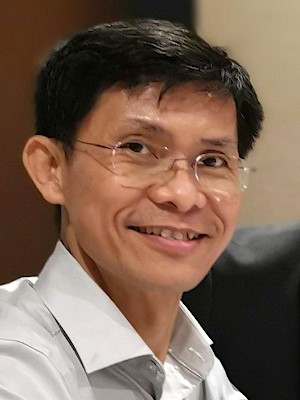 Dr Teoh Bak Koon
| Assoc Prof Robert Tiong is an Associate Professor in School of Civil & Environmental Engineering, as well as Deputy Director of Centre for Infrastructure Systems at Nanyang Technological University (NTU), Singapore. He is the Program Director of the MSc Programme in International Construction Management since its inception in 1991. Assoc Prof Tiong graduated in 1981 from the University of Glasgow with First Class Honours in Civil Engineering, with specialisation in management. He obtained his M.Eng on Construction Engineering & Management, from the University of California, Berkeley in 1987 and his PhD in 1994 from NTU. His research and consulting interests focus on integrated risk analysis and economics, financing, management, and project procurement for infrastructure projects. More recently, he has focused on catastrophe risk management, alternative risk transfer and financing for natural hazards and catastrophes such as floods and earthquakes. He has published extensively including a monograph on “The Structuring of Build-Operate-Transfer (BOT) Projects”, a research report on “Evaluation of risks in BOT projects”, and a book chapter on “Public-Private Partnership for Infrastructure Projects: An Asian Dimension”. He was also a reviewer for the United Nations Industrial Development Organization (UNIDO) Guidelines for the Development, Negotiation, and Contracting of BOT Projects. He has worked with the Asian Development Bank and the World Bank on risk analysis and management of infrastructure projects. Recently, he has been involved in the study of Clean Energy Development and Carbon Credit Finance for hydro-power projects in developing countries such as Vietnam.
|
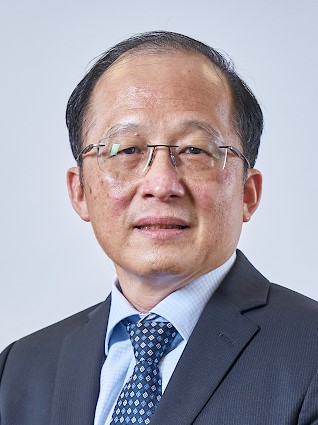 Assoc Prof Robert Tiong
 Dr Thomas Phang Dr Thomas PhangInstructor for: Information Technology in Construction | Dr Thomas Phang is the Vice President of Sales for Trimble Construction in the Asia Pacific region, overseeing markets such as China, Singapore, Malaysia, South Korea, Thailand, Indonesia, India, Japan, Australia, and New Zealand. With over 25 years of experience in the technology sector, he is well regarded for his strategic vision and leadership in driving sales growth. Dr Phang holds a Ph.D. from Nanyang Technological University (NTU), Singapore. He has played a pivotal role in establishing and expanding Trimble's market presence in Southeast Asia, previously serving as the Area Director for the region. His efforts included formulating business strategies and building a highly effective sales team, which led to significant revenue growth for Trimble's Structures division. Before joining Trimble, Dr Phang held leadership roles at major technology companies, including Autodesk, Microsoft, Sun Microsystems, and HP. His expertise lies in managing multicultural teams and fostering strong partnerships, positioning Trimble as a leader in construction technology across the Asia Pacific market. Dr Phang remains committed to delivering innovative solutions tailored to the unique needs of the diverse markets in the region, enhancing Trimble's growth trajectory and market leadership. |