Exploiting Rigid Bodies and Space Group Hierarchy for the Discovery of Crystallographic Polymorphism in Ceramics by Professor Tim White
14 Apr 2026
02.00 PM - 03.00 PM
NTU Lecture Theatre 19 (LT 19)
Alumni, Current Students
NTU MSE Valedictory Lecture 2026 Hosted by Prof Ng Kee Woei
Abstract
Machine learning and artificial intelligence methods promise to accelerate breakthroughs in materials design. Computational materials science outcomes are rapidly improving, but the field could still be
described as 'emergent'. To enhance predictions, the introduction of 'out-of-bound' markers or constraints that force realistic outcomes, together with greater reference to ground-truth
experimental markers are receiving greater attention.
This lecture is not directly concerned with ab initio simulations but highlights two considerations, well developed in experimental materials science and crystallography, that simplify the prediction of polymorphism and phase transitions in ceramic materials – the rigid-body and space-group hierarchies. This approach will be illustrated with high-pressure and high-temperature transformations in apatites and perovskites where polymorphism follows pathways expected by space symmetry and the nondestructive displacement of rigid bodies.
Biography
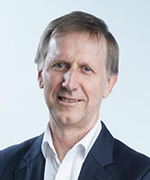
Professor Tim White
School of Materials Science & Engineering
College of Engineering, Nanyang Technological University
Professor Tim White is a President’s Chair in Materials Science & Engineering. Since 1982 he has worked at national laboratories, companies and universities in Australia and Singapore with a focus in minerals processing, nuclear waste treatment, energy materials and environmental management.
In 1995, Tim joined NSTB (the predecessor of A*STAR) as a scientist in the Environmental Technology Institute. Subsequently, he moved to NTU, where he served as Director of the Facility for Analysis, Characterization, Testing, and Simulation (2005 – 2009). He was President of the Materials Research Society of Singapore (2020 – 2025). Tim was a pioneer of massive open online courses (MOOCs) and provided one of the few such courses in the world, awarding full academic credit. This led to the development and deployment of the Adaptive Learning and Teaching System ATLAS online platform used for the delivery of graduate courses in MSE.
In 1995, Tim joined NSTB (the predecessor of A*STAR) as a scientist in the Environmental Technology Institute. Subsequently, he moved to NTU, where he served as Director of the Facility for Analysis, Characterization, Testing, and Simulation (2005 – 2009). He was President of the Materials Research Society of Singapore (2020 – 2025). Tim was a pioneer of massive open online courses (MOOCs) and provided one of the few such courses in the world, awarding full academic credit. This led to the development and deployment of the Adaptive Learning and Teaching System ATLAS online platform used for the delivery of graduate courses in MSE.