Accelerating Catalytic Materials Discovery toward a Sustainable Ammonia Economy with Artificial Intelligence by Professor Hongliang Xin
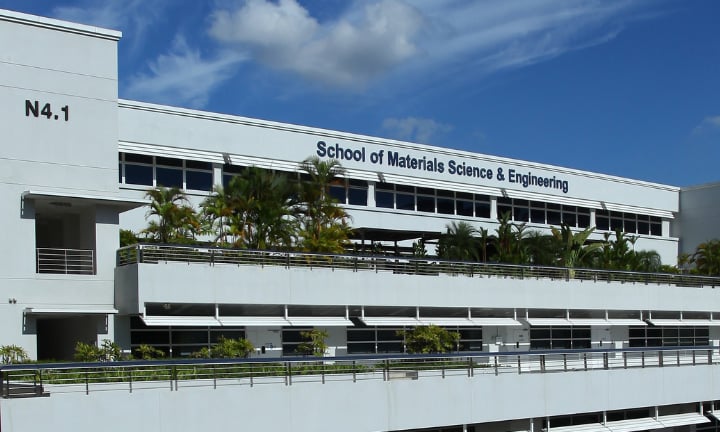
NTU MSE Seminar Hosted by Professor Jason Xu Zhichuan
Abstract
Ammonia is central to modern society, serving as the foundation of global food production and an emerging carbon-free energy carrier. Yet its production and utilization remain energetically intensive, contributing significantly to the nitrogen-cycle imbalance. Achieving a sustainable ammonia economy requires transformative advances in catalytic materials that enable renewable-powered synthesis, efficient electrochemical conversion, and closed-loop nitrogen management. In this talk, we present an explainable AI framework for accelerating catalytic materials discovery across the ammonia value chain. By integrating physics-informed machine learning, mechanistic modeling, and domain knowledge, we move beyond empirical trial-and-error toward interpretable and predictive catalyst design. Renewable electricity from solar and wind is coupled to electrochemical systems for green ammonia synthesis (e.g., nitrate electroreduction), ammonia electrooxidation for fuel cells, and water oxidation for clean hydrogen, forming a circular network. We introduce the emerging paradigm of agentic science, in which AI agents (semi-)autonomously generate hypotheses, design experiments, and iteratively refine catalytic systems within a closed-loop workflow. By embedding catalysis within a broader sustainable nitrogen cycle, we illustrate how AI can accelerate the transition toward a resilient, electrified, and sustainable ammonia economy.
Biography
Professor Hongliang Xin
Department of Chemical Engineering
Virginia Tech