Advancing Solid-State and Dynamic Nuclear Polarisation NMR Strategies for Complex Metal Halide Architectures by Professor Vladimir K. Michaelis
23 Feb 2026
03.00 PM - 04.00 PM
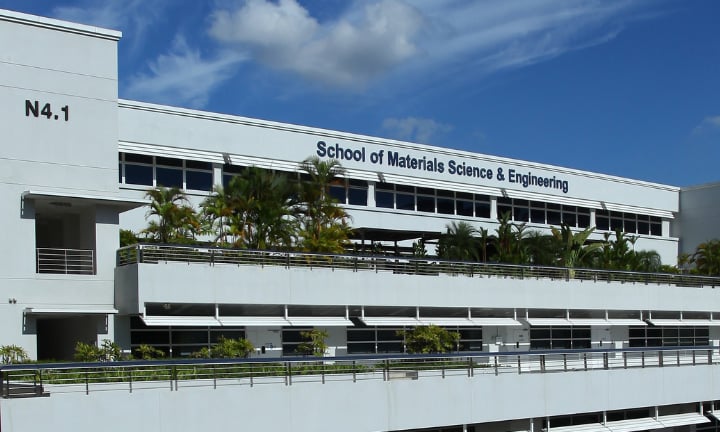
MSE Meeting Room 1 (N4.1-01-28)
Alumni, Current Students
NTU MSE Seminar Hosted by Prof Alex Yan
Abstract
Metal halide materials are highly versatile and have vast potential in photovoltaics, photodetectors, solid electrolytes, radiation detectors, and light-emitting diodes. Their notable tunability is attributable to their exceptional capacity to accommodate a wide range of compositions and crystal structures. This compositional and crystal-structural diversity creates complex atomic-level structures and dynamics that are inaccessible to traditional characterisation tools. Solid-state nuclear magnetic resonance (NMR) spectroscopy is a critical analytical method for detecting critical ion substitutions, domain formation, halide exchange, degradation, high-entropy mixing and more.
This presentation will discuss research efforts to develop chemical design strategies and solid-state and dynamic nuclear polarisation (DNP) NMR techniques for determining atomic-level structure and dynamics in metal halide insulators, semiconductors, and ionic conductors spanning micron- to nanoscale condensed solids. Multinuclear, multidimensional, and variable-temperature NMR techniques will be used to solve intricate structures at interfaces and surfaces of nanomaterials. Specifically, structural models will be provided for perovskite nanomaterials, identifying how organic capping agents attach to the surfaces of inorganic nanoparticles. This will be extended to microcrystalline semiconducting and ionic-conducting materials, introducing new chemical design strategies for substituted and high-entropy metal halides, and demonstrating the effectiveness of NMR in identifying heterogeneous or homogeneous elemental mixing. Finally, a novel polarising agent will be presented, delivering unprecedented DNP NMR performance with sensitivity enhancements of up to 150, resulting in a 22,000-fold reduction in experimental time. These physical spectroscopic methods underpin our design strategies for developing stable, high-performance metal halides.
Biography
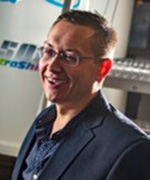
Professor Vladimir K. Michaelis
University of Alberta
Dr Vladimir Michaelis is a professor of physical and materials chemistry at the University of Alberta in Edmonton, Canada. He holds a Canada Research Chair in Magnetic Resonance of Advanced Materials and leads the Chemistry Centre Magnetic Resonance (C2MR) Facility for Solids, which includes the Canadian High Polarisation Magnetic Resonance Centre (CHIPMARC). He received his PhD from the University of Manitoba and held a Banting postdoctoral fellowship at the Massachusetts Institute of Technology, where he conducted research on dynamic nuclear polarisation (DNP). His research focuses on understanding soft and condensed solids using specialised solid-state and DNP NMR techniques, bridging physical and materials chemistry. Through the development and application of solid-state and DNP NMR, his team elucidates the micro- and nanocrystalline structure and dynamics of metal halide and chalcogenide materials that are attracting growing interest in energy harvesting, storage, and sustainability. He has published over 160 scientific articles featuring NMR and has received the Canadian Society of Chemistry's Fred Beamish Award for his research on DNP NMR.
Dr Vladimir Michaelis is a professor of physical and materials chemistry at the University of Alberta in Edmonton, Canada. He holds a Canada Research Chair in Magnetic Resonance of Advanced Materials and leads the Chemistry Centre Magnetic Resonance (C2MR) Facility for Solids, which includes the Canadian High Polarisation Magnetic Resonance Centre (CHIPMARC). He received his PhD from the University of Manitoba and held a Banting postdoctoral fellowship at the Massachusetts Institute of Technology, where he conducted research on dynamic nuclear polarisation (DNP). His research focuses on understanding soft and condensed solids using specialised solid-state and DNP NMR techniques, bridging physical and materials chemistry. Through the development and application of solid-state and DNP NMR, his team elucidates the micro- and nanocrystalline structure and dynamics of metal halide and chalcogenide materials that are attracting growing interest in energy harvesting, storage, and sustainability. He has published over 160 scientific articles featuring NMR and has received the Canadian Society of Chemistry's Fred Beamish Award for his research on DNP NMR.