Machine learning and AI-enabled Alloy Design: from Small Data, Small Model to Big Data, Large Model by Associate Professor Ziyuan Rao
30 Jan 2026
10.00 AM - 11.00 AM
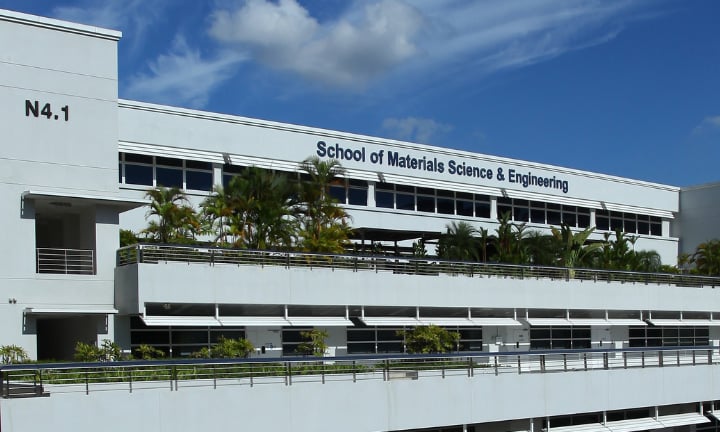
MSE Conference Room (N4.1-02-02)
Alumni, Current Students
NTU MSE Seminar Hosted by Professor Li Shuzhou
Abstract
The rapid development of generative artificial intelligence (AI) and large language models has substantially expanded the scope and impact of machine learning in materials design. Landmark achievements such as AlphaFold have demonstrated the remarkable capability of generative AI in capturing complex relationships among composition, structure, and performance. However, alloy design poses even greater challenges, owing to its vastly larger compositional space, more intricate synthesis and processing routes, and deeper underlying physical mechanisms. These difficulties are further compounded by the scarcity of high-quality experimental data, which significantly limits the direct application of data-driven approaches. In this talk, I will present some of our recent progress in applying machine learning and AI techniques to alloy design, with a particular focus on our work in efficiently developing near-zero thermal expansion high-entropy Invar alloys. Furthermore, we introduce DeepLight, a ChatGPT-based large language model framework designed to function as an agent for magnesium alloy design and development. By integrating reinforcement learning with chain–of–thought–based reasoning strategies, DeepLight is endowed with performance-aware reasoning capabilities, enabling it to effectively support and accelerate the design, optimization, and exploration of magnesium alloys.
Keywords:Artificial Intelligence;Alloy Design;High-Entropy Alloys;Magnesium Alloys
REFERENCES
[1] Ziyuan Rao, et al. Science, 2022, 378(6615): 78-85.
[2] Zini Yan, et al. MGE Advances. 2024; 2(4): e77.
Biography
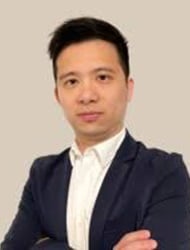
Associate Professor Ziyuan Rao
Shanghai Jiao Tong University
Ziyuan Rao, Associate Professor at Shanghai Jiao Tong University. He holds a PhD from RWTH Aachen University in Germany and has served as a postdoctoral researcher and group leader at the Max Planck Institute for Iron Research in Germany. In July 2024, he returned to China to join the School of Materials Science and Engineering at Shanghai Jiao Tong University. He has long been engaged in AI-based materials science research and has made a series of essential contributions in cutting-edge fields such as high-entropy alloys in recent years. He has published over 30 papers in journals such as Science.