
Research Integrity (RI)
Research conducted with integrity ensures that all research data generated by the University is beyond reproach. Research Integrity can be broadly defined as (1) practicing the use of honest and supported methods when performing and reporting research, (2) ensuring accuracy in reporting, (3) maintaining proper records of data generated and (4) adhering to statutory requirements. At NTU, policies and guidelines have been implemented to inform and educate researchers on the University's stand and requirements on Research Integrity. This site documents these measures so that all personnel involved in research in the University are kept abreast of the latest developments in this area.
NOTE: Recordings of courses and talks on research integrity now available! Click here to view video listing.

NTU Research Integrity Officer
Responsible conduct of research encompasses all aspects of research behaviour and requires researchers to uphold the highest standards of care, rigour, honesty, and respect for all individuals, materials, and processes involved. These principles reflect the foundations of good scholarship and align with the Singapore Statement on Research Integrity. Members of the research community also have a duty to report any observed, suspected, or apparent misconduct, malpractice, or non-compliance with the University’s codes of conduct and discipline.
To report a potential case of research misconduct or poor research practice, please contact NTU's Research Integrity Officer at [email protected]. All reports will be handled with strict confidentiality.
Assoc Prof Navin Kumar Verma
NTU Research Integrity Officer
Contact Us
For general RI enquiries, please contact [email protected]
For specific queries, please contact a member of the RI team below.
Contact UsReport A Concern
The responsible conduct of research covers research behaviour in all its aspects, and commits the researcher to conduct his research with care, rigour, honesty and respect. These are the hallmarks of good scholarship and are in accordance with the Singapore Statement on Research Integrity.
There is also an obligation to report observed, suspected or apparent misconduct, malpractices and/or non-compliances with the University’s codes of conduct and discipline. This includes research that involves the use of human subjects and animals in research, including issues with husbandry care of animals.
NTU Policy on AI-Use in Research
NTU recognises that GenAI has the potential to enhance the quality and efficiency of research, and provides new modes of inquiry. However, it is important for researchers to recognise the risks associated with GenAI use. These include inaccurate outputs (or falsehoods), bias, lack of appropriate attribution (plagiarism), threats to data confidentiality, and infringement of intellectual property.
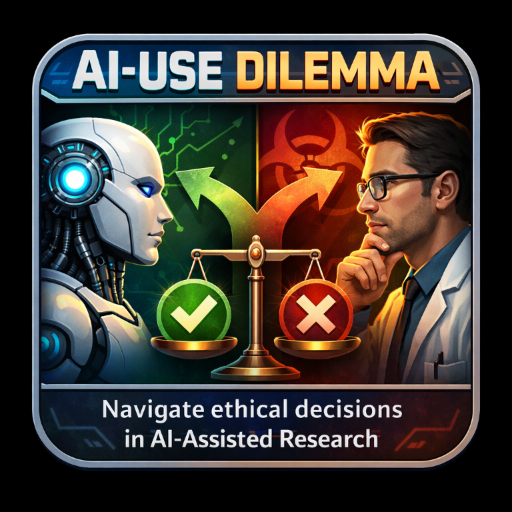
AI-Use Dilemma Game
NTU's Research Integrity & Ethics Office (RIEO) has developed an interactive role-playing game that challenges players to navigate the complex ethical landscape of AI-use when conducting research. Step into real-world scenarios where every decision matters—balancing innovation, integrity, and responsibility. Test your judgment, explore consequences, and sharpen your ethical thinking in the age of AI.
[Click here to access the game]