
Professional Certificate in Chartered Engineer (SG) in Sustainability
Professional Certificate in Chartered Engineer (SG) in Sustainability
Launched in March 2024, the Chartered Engineer (SG) in Sustainability sector Certification Programme [CEng (Sustainability)], developed by the IES Chartered Engineering Board (CEB), offers a formal training and certification system in the Sustainability sector. The aim is to provide professional recognition to qualified engineers in the sustainability sector. Being registered as a Chartered Engineer serves as an external validation of your experience, expertise and professional competence.
Professional Certificate in Chartered Engineer (SG) in the Sustainability sector is designed for candidates to complete 4 core courses and 2 elective courses, as part of the pre-requisites for the CEng (Sustainability) certification with the IES Chartered Engineering Board.
Participants who are not intending to pursue the Chartership, may enrol in the course modules for the purpose of enhancing their skills and knowledge in sustainability.
Notes:
- Candidates are to check the pre-requisites and register directly with IES Chartered Engineering Board for the CEng (Sustainability) certification. Visit IES Chartered Engineering Board website for more info: https://cebsg.org/chartered-engineer-sg-in-sustainability-sector-certification-programme/
- Candidates must complete all 6 modules (4 core & 2 electives) with NTU PACE, to be qualified for the Professional Certificate.
Supported by:
IES Academy
.png?sfvrsn=8cd2730_2)
Frequently Asked Questions (FAQ)
- CEng (Sustainability) Certification: Completing all six courses (four core and two electives) fulfills one of the prerequisites set by the IES Chartered Engineering Board.
- Comprehensive Learning: The courses cover the engineers’ competencies in Sustainability, allowing them to navigate the expanding green sector.
- CPD: Professional Development Units (PDU) (Pending Confirmation)
Embark on a transformative journey to lead sustainability initiatives with confidence and expertise, grounded in a deep understanding of global best practices and innovative strategies. The 'Professional Certificate in Chartered Engineer (SG) in Sustainability' is a flagship programme that builds on a strong foundation of industry standards and regulatory knowledge, empowering participants to make a meaningful impact in the rapidly evolving field of sustainable development.
This intensive and immersive programme is designed to equip engineers, project managers, and professionals with the skills to address pressing environmental challenges, implement sustainable solutions, and drive organisational change. Through expert-led sessions and hands-on applications, participants will explore advanced sustainability frameworks, carbon management techniques, and strategies for achieving compliance with environmental, social, and governance (ESG) standards. Learn how to integrate sustainable practices into projects, mitigate climate impact, and contribute to building a resilient future.
This foundational programme sets the stage for advanced sustainability certifications, enabling participants to enhance their credentials and make significant contributions to their industries. Upon completing the course, learners will acquire the following knowledge and skills:
- Grasp essential sustainability principles and their relevance to engineering and project management.
- Develop practical expertise in carbon accounting, emissions reduction, and resource efficiency.
- Master strategies for sustainability reporting, stakeholder engagement, and ESG compliance.
- Apply frameworks for assessing environmental impacts and driving sustainable innovations across industries.
| Module | Objective |
 CM 1 | Introduction to Sustainability is a 2-day course designed to introduce learners to the essential concepts and frameworks related to sustainability and climate change. The course delves into global trends on climate change and the United Nations' Sustainable Development Goals (SDGs). It also covers the Singapore Green Plan, highlighting the country's strategic approach to sustainability and investment. Through this course, learners will gain a comprehensive understanding of the global and local sustainability landscape and develop the leadership skills necessary to implement sustainable practices effectively. |
 CM 2 | An intensive 3-day course designed to equip learners with the skills and knowledge necessary to measure and manage carbon emissions. The course provides a deep dive into the science of climate change, the role of engineers in mitigation, and the methodologies for categorising and managing emissions. Learners will also explore emerging technologies and digital tools for sustainability and learn how to prepare comprehensive greenhouse gas (GHG) inventories to support decarbonisation targets and reporting. |
 CM 3 | An intensive 3-day course designed to equip learners with the fundamentals of sustainability reporting through the Environmental, Social, and Governance (ESG) pillars. It addresses the implications of climate change, highlighting its critical role in the foundation of modern business practices. This course emphasises the importance of responsible leadership in meeting community and societal expectations. Learners will gain essential knowledge and skills to navigate the regulatory requirements and best practices in sustainability reporting, enabling them to drive sustainable initiatives within their organisations. |
 CM 4 | An intensive 3-day course designed to cover the fundamentals of Singapore's existing and emerging sustainability legislation framework, which is an integral part of Singapore’s strategy to build a sustainable, resource-efficient, and climate-resilient nation. Learners will explore key legislations including the Resource Sustainability Act (MEWR), Green Mark (BCA), Carbon Pricing Act (MSE), and Energy Conservation Act (MSE), and gain insights into ISO 50001 standards, environmental management, and sustainability best practices. |
| An intensive 3-day course designed to cover the technique to integrate Environmental, Social and Governance criteria into business and investment decisions for sustainable outcome for society at large which will assist business leaders and managers in understanding how sustainable finance and responsible investment strategies can help accelerate action on the Sustainable Development Goals (SDGs) and further impact their business and industry. The course is designed to cover business sustainability and the ESG mindset, methodologies of sustainable finance, appreciate green financing from the issuer and investor perspectives, sustainability principles and frameworks relating to sustainable finance reporting and assessment and taxonomy |
| An intensive 3-day course designed to cover the latest technological innovations and renewable energy sources and offers strong emphasis on the practical application to facilitate sustainability transition. Across 3 days, it covers emerging sustainability technologies, digital tools like IoT and data analytics, innovation management as well as delves into green technologies, renewable energy sources such as wind, solar, and hydrogen, and strategies for integrating clean energy into various systems. Participants will gain insights across various innovations & technologies and integration of such systems across sectors like built environment, infrastructure and industrial. |
 EM 2
EM 2 EM 5
EM 5This course is suitable for:
|
Venue: e2i (Devan Nair Institute for Employment and Employability)
Time: 9am - 5pm
| Course | Course Dates |
|---|---|
| CM1 Introduction to Sustainability | 14 & 15 April 2026 9am – 5pm |
| CM2 Carbon Accounting Fundamentals | 11, 12 & 13 May 2026 9am – 5pm |
| CM3 Sustainability Reporting | 11, 12 & 13 June 2026 9am – 5pm |
| CM4 Sustainability Legislation Framework of Singapore | 9, 16 & 23 July 2026 9am – 5pm |
| EM2 Green Finance | Coming Soon |
| EM5 Sustainability Technologies and Renewable Energy | Coming Soon |
Note: NTU reserves the right to change the date, venue, and mode of delivery due to unforeseen circumstances.
 | Upon completion of all 6 courses (4 core & 2 elective) with NTU PACE, learners will be awarded a "Professional Certificate in Chartered Engineer (SG) in Sustainability". |
| Fee and Funding | ||||
|---|---|---|---|---|
| Course | Standard Fee (Inclusive of 9% GST) | Singapore Citizens (aged 21-39) / PR (aged ≥21) Up to 50% Funding | Singapore Citizens (aged ≥40) MCES1 - Up to 70% Funding | SME-sponsored Singapore Citizens / PR ETSS2 - Up to 70% Funding |
| CM1 Introduction to Sustainability | S$2,180.00 | S$1,180.00 | S$780.00 | S$780.00 |
| CM2 Carbon Accounting Fundamentals | S$3,270.00 | S$1,770.00 | S$1,170.00 | S$1,170.00 |
| CM3 Sustainability Reporting | S$3,270.00 | S$1,770.00 | S$1,170.00 | S$1,170.00 |
| CM4 Sustainability Legislation Framework of Singapore | S$3,270.00 | S$1,770.00 | S$1,170.00 | S$1,170.00 |
| EM2 Green Finance | TBC | TBC | TBC | TBC |
| EM5 Sustainability Technologies and Renewable Energy | TBC | TBC | TBC | TBC |
Funding Requirements:
- You must achieve a minimum of 75% attendance for each course.
- You must complete and pass all assessment components.
Read more about funding here.
• NTU/NIE alumni may utilise their $1,600 Alumni Course Credits. Click here for more information.
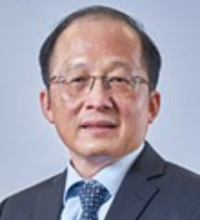 | Associate Professor Tiong Lee Tiong, RobertEmeritus Associate Professor, School of Civil and Environmental Engineering - Emeritus Associate Professor Dr Robert Tiong is an Emeritus Associate Professor in School of Civil & Environmental Engineering. He was CEE Continuing Education & Training Director and also Deputy Director of the Robotics Research Centre, and Centre for Infrastructure Systems at Nanyang Technological University, Singapore. He has been the Program Director of the MSc Programme in International Construction Management since its inception in 1991. Dr Tiong graduated in 1981 from University of Glasgow with First Class Honours in Civil Engineering, with specialisation in management. He obtained his M.Eng on Construction Engineering & Management, from University of California, Berkeley in 1987 and his PhD in 1994 from NTU. His research and consulting interests focus on integrated risk analysis and economics, financing, management, and project procurement for infrastructure projects. More recently, he has focussed on catastrophe risk management, alternative risk transfer and financing for natural hazards and catastrophes such as floods and earthquakes. He has published extensively including a monograph on “The Structuring of Build-Operate-Transfer (BOT) Projects”, a research report on “Evaluation of risks in BOT projects”, and a book chapter on “Public-Private Partnership for Infrastructure Projects: An Asian Dimension”. He was also a reviewer for the UNIDO Guidelines for the Development, Negotiation, and Contracting of BOT Projects. He has worked with the Asian Development Bank and the World Bank on risk analysis and management of infrastructure projects. Recently, he has been involved in the study of Clean Energy Development and Carbon Credit Finance for hydro-power projects in developing countries such as Vietnam.
|
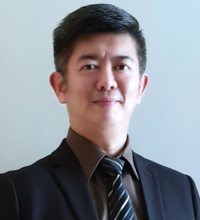 | Mr. Eric LohEric graduated in NTU as an Electrical and Electronic Engineer close to 30 years ago and now serves as an NTU alumni. An advocate of smart cities and building digital twin and sustainability solutions, intelligence building green-mark standard and UN SDG goals, Eric collaborated with many companies’ delivering smart cities / buildings sustainability solutions as a technopreneur and advisor. Eric also co-founder SCN (Smart City Network), served as an Exco member and Vice Chair for Built Environment sector and been advising different government agencies, including BCA, IMDA, government and tertiary sustainability committee. He has been invited to judge in various tech competitions such as Singapore-BRICS Entrepreneurship Competition, SMU smart city competition, TechBlazer & Enterprise Singapore SlingShot and universities’ hackathons which focus in theme for smart and sustainability solutions. He is currently the managing director and shareholder of G Element Pte Ltd, multiple awards winning company in Asia. He had collaborated with different MNCs including Johnson control, Siemens, Bosch, Huawei and Dell for smart and sustainability projects. As a guest speaker and thought leader, Eric had been featured in various Asean forums including SME Go Digital, Singapore Sustainability, Asean Smart Tourism and many industry transformation conferences since 2010.
|
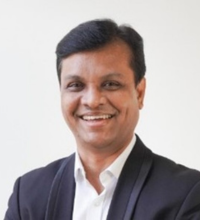 | Mr. Syed MubarakSyed has more than 30 years of strategic leadership experience in ESG/Sustainability, Engineering, Facilities Management, Asset Management and Business development in Asia across multiple business sectors- hospitality, corporate real estate, commercial, industrial, manufacturing, institutional and healthcare. Syed is currently the Vice President at EPS Singapore to oversee the Sustainability and Technology related businesses and project management. Key focus areas are ESG/Sustainability, Digital Transformation, Decarbonization, Training, Mentoring and Deep Tech development to commercialization. Syed was the Executive Director at Sands China, provides strategic and operational leadership in managing team on environmental and engineering activities for 35 million sq.ft of integrated resorts with 13,000 hotel rooms, casino, shopping malls, 15,000 seat Arena, 2.1 million sq.ft MICE, 1,800 seat luxury Theatre, etc. He pivoted the execution of sustainable development goals (SDGs), sustainability reporting (ESG) as well as rating systems like DJSI, Sustainalytics, Bloomberg ESG, CUHK BSI, FTSE4Good, etc.
|