Global Asia Research Centre (GARC)
At NTU’s Global Asia Research Centre, we believe that research grounded in the histories and present societies of Asia can reshape our understanding of the world.
The centre brings researchers into the past and present of diverse, dynamic societies of Asia together in a conversation about this region and the world. Asia is not simply a site of rapid change. It is a generative force in global debates on political order, governance, development, culture and climate. Moving beyond intellectual frameworks which present Asia’s societies as different from dominant European categories, the centre produces new sources, concepts and methods drawn from Asian contexts that travel across regions and disciplines.
Research ranges from the past and present of the global political order, to the role of migration within the global economy, to the way bodies are understood through time. Our goal throughout is to be an exciting, generative centre, drawing scholars from across the region and the world to produce new idea.
In doing so, the Global Asia Research Centre positions NTU as a leading centre for reshaping our understanding of global public affairs, in the broadest sense.
Research Strands
The centre advances two research strands:
Politics and Governance Examining how states, institutions, and communities govern plural societies, manage change, and navigate global pressures. |
Trade and Political Economy Studying regional economic integration, global supply chains, financial systems, and Southeast Asian and South Asian economic transformations. |
Activities
- Visiting fellows and policy dialogues
- Data and archival collaborations with regional partners
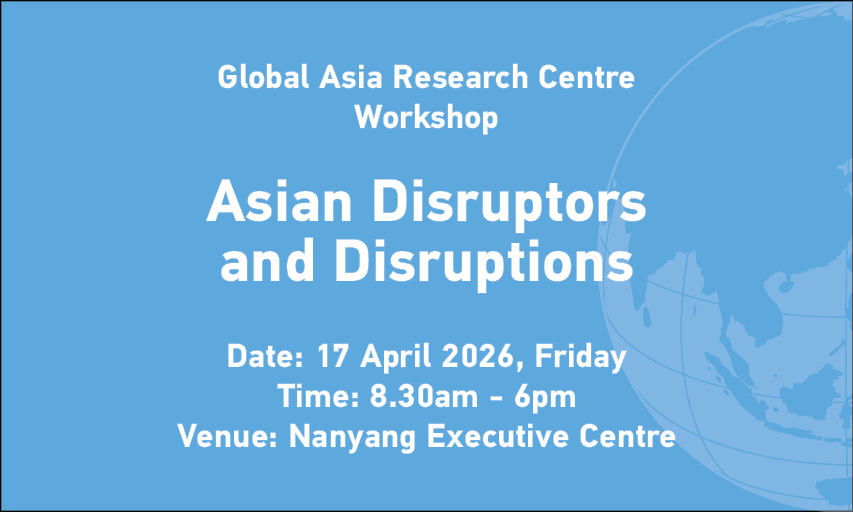
- Workshops and conferences on Global Asia concepts
- Support for early-career scholars and postgraduate researchers
- Co-development of public affairs curricula and teaching innovations
Research Fellowship
The NTU CoHASS Early Career Research Fellowship aims to nurture promising young researchers within the humanities, arts, and social sciences, enabling them to develop strong, independent research portfolios while contributing to the College’s research, teaching, and intellectual life.