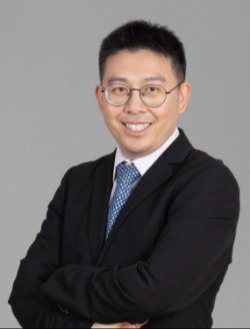
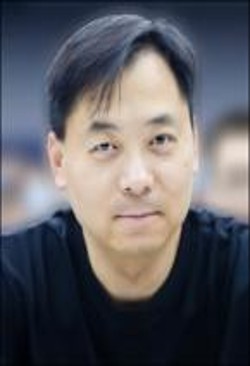
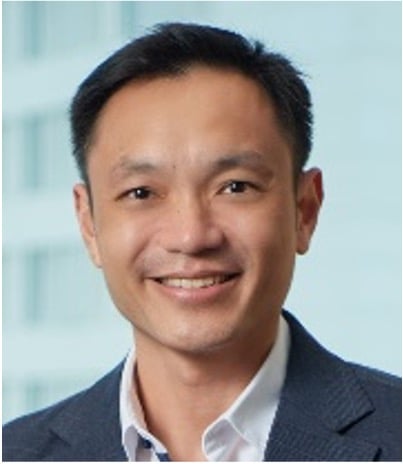
Alvin CHAN Guo Wei
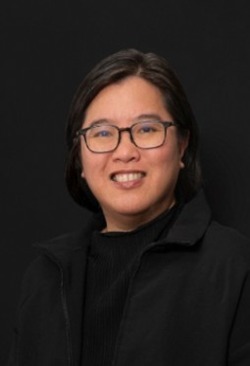
Dr Alvin Chan’s research interests centre around making AI technologies safe and beneficial for humanity. These encompass topics such as deep learning for medical applications, adversarial learning and generative modelling. Awarded the MOE START (Singapore Teaching and Academic Research Talent) fellowship, Dr Alvin Chan was a postdoctoral associate at the Massachusetts Institute of Technology and Harvard Medicine School. During that period, he focused on using deep learning technologies to enhance drug delivery applications. He graduated with a Computer Science Ph.D. from Singapore’s Nanyang Technological University in 2021, supported by the prestigious Nanyang President's Graduate Scholarship (NPGS). He has contributed several publications in premier deep learning venues such as NeurIPS, ICLR, CVPR and ACL.
Research Interests:
Generative Models, Adversarial Learning, Computational Biology, Deep Learning
Latest Publication:
[email protected]
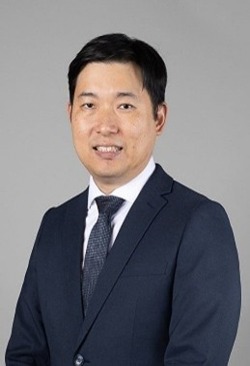
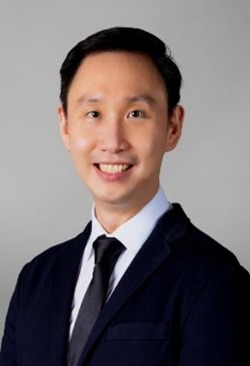
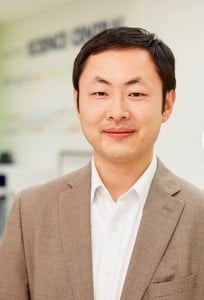
Dr Xiuyi Fan is an Assistant Professor of Digital Health at Nanyang Technological University (NTU), jointly appointed at the Lee Kong Chian School of Medicine and the College of Computing and Data Science. He leads interdisciplinary research at the intersection of artificial intelligence, medicine, and education, with a particular focus on explainable AI, uncertainty quantification, and trustworthy deployment of AI systems in real-world clinical settings.
Dr Fan’s research spans a wide range of applications, including medical imaging, physiological time-series analysis, hospital-at-home care, and clinical risk profiling. His work emphasizes transparency, interpretability, and robustness, aiming to ensure that AI systems can be meaningfully understood and responsibly adopted by clinicians and healthcare stakeholders. He has published across leading venues in AI, medical informatics, and digital health.
In education, Dr Fan is the Program Director of NTU’s MSc in AI in Medicine programme, where he is actively involved in curriculum design, industry engagement, and talent development at the interface of medicine and AI. He is also committed to translational impact, working closely with hospitals, and industry collaborators to bridge methodological advances with clinical and societal needs.
Research Interests:
Explainable AI
Latest Publication:
[email protected]
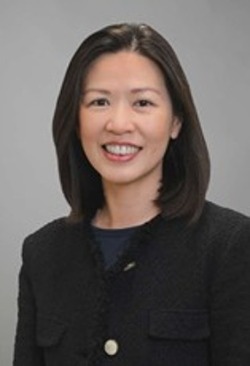
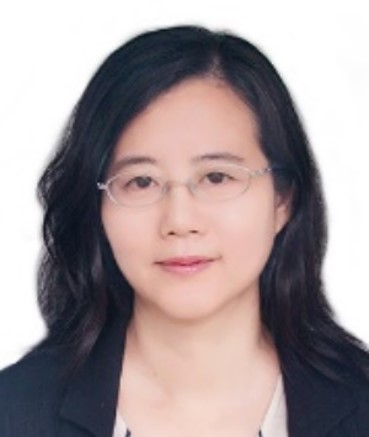
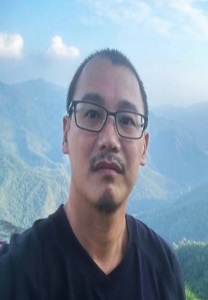
Dr Yeo Si Yong is an Assistant Professor of Digital Health at LKCMedicine, where he advances the development and clinical translation of AI for healthcare. He specialises in AI-based biomedical data analysis, with strong expertise in computer vision and the design of robust AI systems for medical imaging, diagnostics, and decision support. His projects include medical innovation pipeline, deep learning models and multimodal analytics for healthcare.
Dr Yeo contributes deep technical expertise in medical image understanding, predictive modelling, and medical AI, to enable research that turns complex signals into actionable insights. He works closely with clinicians and healthcare domain experts to align technology with patient needs and operational realities, prioritising reliability, fairness, and safety in medical settings. His research interests include medical imaging, explainable AI, risk stratification, and multimodality data analysis. The technology developed have help clinicians in disease detection, diagnosis, patient-specific treatment and medical intervention.
Research Interests:
Medical imaging, Explainable AI, Risk Stratification, Multimodality Data Analysis, Health Informatics, Medical Data Interpretation, Population Health
Latest Publication:
[email protected]
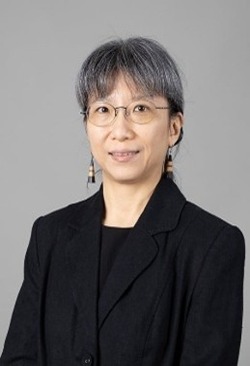
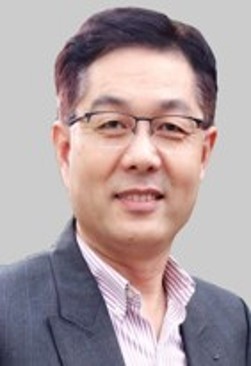
Dr. Baosheng Yu is currently an Assistant Professor at the Lee Kong Chian School of Medicine (LKCMedicine), Nanyang Technological University (NTU), Singapore. Before joining LKCMedicine, he was a Research Fellow at the University of Sydney, Australia. He obtained a B.E. degree from the University of Science and Technology of China (USTC) in 2014 and a Ph.D. degree from the University of Sydney (USYD) in 2019. His research focuses on applying cutting-edge AI technologies to medical data, including images, text, and signals, to improve the accuracy and efficiency of diagnosis, treatment, and patient care.
Research Interests:
Medical Imaging, Medical Image Analysis, Large Language Models for Medicine
Latest Publication:
HUANG Tao
[email protected]
Dr Huang Tao’s work integrates physical climate modelling, remote sensing, and epidemiological methods to provide novel insights into the complex interactions between climate dynamics and human health, contributing to a deeper understanding of the climate–health nexus.
He also works on projecting future heat-related health burdens under climate change, and on developing low-cost strategies for heat-risk mitigation and intervention to support climate adaptation and public health decision-making.
Research Interests:
Humid heat; Climate-health nexus; Heat early warning systems
Click here for more information.
Michele NGUYEN
[email protected]
Her research centers on developing advanced modelling approaches to support public health management of zoonotic diseases, with a particular focus on vector-borne, food-borne, and water-borne infections. Aiming to inform strategic planning and resource allocation, she integrates cutting-edge statistical and mathematical techniques, including spatiotemporal analysis and extreme value modelling.
Research Interests:
Population Health, Data analytics, Environment and Sustainability
Click here for more information.
TAN Ern Yu
[email protected]
Dr Tan is actively engaged in research focused on translatable clinical outcomes. Her extensive research endeavors have involved collaborations with various esteemed local and international institutes. Dr Tan’s primary research interest lies in biomarker discovery, with a focus on blood-based DNA and microRNA markers that could serve as potential cancer markers.
Research Interests:
Biomarker discovery, Development for breast cancer and high-risk breast diseases, Artifical Intelligence applications in breast imaging and data analytics
Click here for more information.
Sabrina WONG Kay Wye
[email protected]
Dr. Sabrina Wong received the NMRC HPHSR Clinician Scientist Award in 2024, and the NMRC Population Health Grant (Open) in 2025 for the development and evaluation of a digital health coach for weight management in type 2 diabetes.
Asst Prof Sabrina Wong is passionate about leveraging AI to support preventive health and chronic disease care. She received the NMRC HPHSR Clinician Scientist Award in 2024, and the NMRC Population Health Grant (Open) in 2025 for the development and evaluation of a digital health coach for weight management in type 2 diabetes. She has been awarded under the Foundation Ai Model Program in 2026 for development of a foundational model for multi-morbidity clinical decision support.
Research Interests:
Chronic Care, Population Health
Click here for more information.
Eugene FAN Bingwen
[email protected]
Dr. Eugene Fan’s research interests are in AI-driven diagnostics, thrombosis and haemostasis, medical innovation, and sustainability in healthcare. His work focuses on AI-enabled peripheral blood-film analysis, laboratory and clinical applications for thrombosis and haemostasis, and point-of-care and diagnostic medical devices that are supported by several filed patents
Research Interests:
Artificial Intelligence, Peripheral Blood Films, Thrombosis and Haemostasis
Click here for more information.
[email protected]
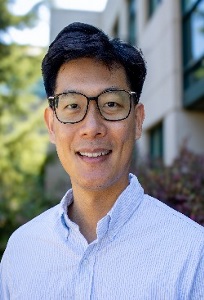
Assistant Professor Kelvin Li Zhenghao is a Consultant Ophthalmologist and the Clinical Lead for Innovation and Digitalisation at Tan Tock Seng Hospital. He serves as an Assistant Professor at the Lee Kong Chian School of Medicine, Nanyang Technological University. Dr. Li occupies a unique niche at the intersection of clinical medicine and engineering, holding a Master of Technology in Intelligent Systems from NUS-ISS, where he was awarded the Best Project Award and named to the CEO’s Honour List for two consecutive years. His research portfolio focuses on the rigorous benchmarking of Artificial Intelligence and the development of resilient health systems. During his tenure as a Visiting Scholar at the Stanford Byers Eye Institute (2024–2025), he led research into the clinical applicability of Generative AI, publishing on the performance of Vision-Language Models (VLMs) and Large Language Models (LLMs) for ophthalmic diagnostics.
He is the Principal Investigator for multiple grants, developing accessible diagnostic tools such as smartphone-based deep learning systems and virtual reality perimetry. In addition to his work on decentralized care models, he actively publishes on complex clinical cases related to neuro-ophthalmology and general ophthalmology.
His contributions to research and education have been recognized with the Asia-Pacific Academy of Ophthalmology Achievement Award (2019), the Young Investigator Award (Bronze) at the Singapore Healthcare and Biomedical Congress (2019), and the National Healthcare Group Teaching Award for Junior Doctors (2021). He is a Fellow of the Royal College of Ophthalmologists (UK) and the Academy of Medicine, Singapore. A leader in healthcare transformation, he serves as the HEAL Adoption Lead at the Centre for Healthcare Innovation (CHI) and is a member of the Clinician Innovator Committee at Tan Tock Seng Hospital.
Research Interests:
Ophthamology, Implementation
Latest Publication:
[email protected]
Dr. Joanne Ngeow is an Associate Professor at Nanyang Technological University's Lee Kong Chian School of Medicine. She is also a Senior Consultant in Division of Medical Oncology at the National Cancer Centre Singapore (NCCS). A/Prof Ngeow currently heads the NCCS Cancer Genetics Service with an academic interest in hereditary cancer syndromes and translational clinical cancer genomics. Her current clinical focus and research revolves around understanding cancer predisposition by studying cancers clustering in families, young adults and in families with multiple / rare cancer presentations.
Research Interests:
Human Cancer Genetics and Genomic Medicine, Molecular Epidemiology of Cancer, Population Health and Health Services Research
Click here for more information.
Andrew LI Yunkai
[email protected]
Dr Andrew Li is both a respiratory and intensive care physician with special clinical interests in intensive care, airway diseases, and interstitial lung disease. He is also a visiting consultant at Tan Tock Seng Hospital and National University Hospital.
His other area of interest is in health informatics, and he has been deeply involved in the development of the new-generation electronic medical system that is being rolled out in both NUHS and NHG clusters.
Research Interests:
Intensive care, respiratory medicine, health informatics
Click here for more information.
NG Wee Khoon
[email protected]
With decades of experience in the field of Medicine, he specialises in pancreatobiliary diseases, advanced endoscopic procedures and general gastroenterology.
In addition to his clinical work, Adj Asst Prof Ng is actively involved in clinical research and innovation. He had contributed to several research publications and presentations in the field of Gastroenterology and Hepatology, and Medical Education. He is actively involved in clinical trials and has received grants for projects in to improve gastrointestinal care with the usage of Artificial Intelligence (AI).
Research Interests:
Gastroenterology & Hepatology
Click here for more information.
Key Researchers in the Steering Committee
[email protected]
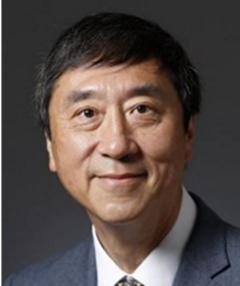
Professor Sung is a renowned researcher in gastroenterology and hepatology. He led a group of experts from 15 Asia-Pacific countries to launch colorectal cancer screening research in 2004, and has laid down clear guidelines and promoted colorectal screenings in the region.
Professor Sung’s research interests include intestinal bleeding, Helicobacter pylori, peptic ulcer, hepatitis B, colorectal cancer, and other cancers related to the digestive system. Professor Sung and his team proved the relationship between H. Pylori and peptic ulcer diseases. They were first in demonstrating that a course of antibiotics lasting a week can cure H. Pylori infection and successfully treat peptic ulcers and minimize their relapse. At the same time, he and his research team pioneered the use of endoscopic treatment for ulcer bleeding to reduce the need for operative surgery.
Professor Sung has published over 1000 full scientific articles in leading medical and scientific journals. He was listed as “Highly Cited Researchers”, released by the Clarivate Analytics, for the years 2018, 2019 and 2020. He has edited and authored around 30 books, as well as many chapters in major textbooks.
Click here for more information.
MIAO Chun Yan
[email protected]
Dr Miao is an expert on Human-Centered AI and is well-known for her impactful AI research in health, ageing, education, and digital industry. She has received over 20 Best Paper and AI awards.
Dr Miao is the Founding Director and Lead PI of the Joint NTU-UBC Research Centre of Excellence in Active Living for the Elderly (LILY), the first AI-empowered interdisciplinary ageing research centre in Singapore.
Research Interests:
Human Centred Artificial Intelligence (HAI), Human AI Interaction, AI Ethics, HAI for health, ageing, sustainability and education.
Click here for more information.
GUAN Cuntai
[email protected]
Prof Guan is the Director of the Centre for Brain-Computing Research (CBCR). He has been the Director of the Artificial Intelligence Research Institute of NTU and the Co-Director for S-Lab for Advanced Intelligence from 2020-2025.
He published 420 refereed journal and conference papers and holds 26 granted patents and patent applications. He licensed 17 patents/technologies to six companies in Singapore and USA. He is a recipient of numerous awards owing to his contributions to Brain-Computer Interface research.
Research Interests:
Brain-Computer Interfaces (BCI), Machine Learning, Neural Signal & Image Processing, and Artificial Intelligence
Click here for more information.
[email protected]
Dr Dacheng Tao is currently a Distinguished University Professor in the College of Computing & Data Science at Nanyang Technological University. He mainly applies statistics and mathematics to artificial intelligence and data science, and his research is detailed in one monograph and over 200 publications in prestigious journals and proceedings at leading conferences, with best paper awards, best student paper awards, and test-of-time awards. His publications have been cited over 112K times and he has an h-index 160+ in Google Scholar. He received the 2015 and 2020 Australian Eureka Prize, the 2018 IEEE ICDM Research Contributions Award, and the 2021 IEEE Computer Society McCluskey Technical Achievement Award. He is a Fellow of the Australian Academy of Science, AAAS, ACM and IEEE.
Research Interests:
Artificial Intelligence
Click here for more information.
[email protected]
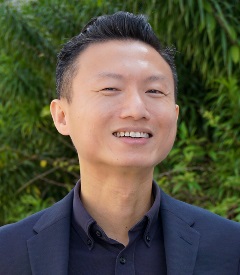
Dr. Wilson Goh is the Chief Data Scientist at the Centre of AI in Medicine (C-AIM) at Nanyang Technological University and a Senior Lecturer (Associate Professor) at Imperial College London. Wilson currently leads the Data Science Research Programme and serves as Co-Director of the Centre for Biomedical Informatics (CBI).
Dr. Goh’s research focuses on leveraging complex multimodal clinical datasets to develop and deploy AI solutions within hospital environments, with particular emphasis on mental health and proteomics. His recent work has expanded into implementation science, where he explores data governance issues and investigates how clinicians trust and interact with AI systems. Through his research, Dr. Goh aims to bridge the gap between basic science, AI innovation and integration into healthcare.
Research Interests:
Mental Health, AI Development, Implementation, Governance
Latest Publication:
Predicting antipsychotic responsiveness using a machine learning classifier trained on plasma levels of inflammatory markers in schizophrenia.
Click here for more information.
TAN Cher Heng
[email protected]
Adjunct Associate Professor Cher Heng Tan graduated with a medical degree from National University of Singapore, post-graduate training in Diagnostic Radiology at MD Anderson Cancer Center, and EMBA from Insead.
He is presently Senior Consultant with the Department of Diagnostic Radiology at Tan Tock Seng Hospital (TTSH), Assistant Chairman Medical Board (Clinical Research and Innovation) at TTSH,
Executive Director at Centre for Healthcare Innovation as well as Assistant Dean (Clinical Research) for
Lee Kong Chian School of Medicine. His subspecialty interests are in oncologic imaging and more recently, use of artificial intelligence in medical imaging.
Research Interests:
Liver Imaging, Prostate Imaging, Artificial Intelligence in Medical Imaging
Click here for more information.