Book Talk: Sober State: Origins of Alcohol Prohibition in India (Cambridge University Press, 2026)
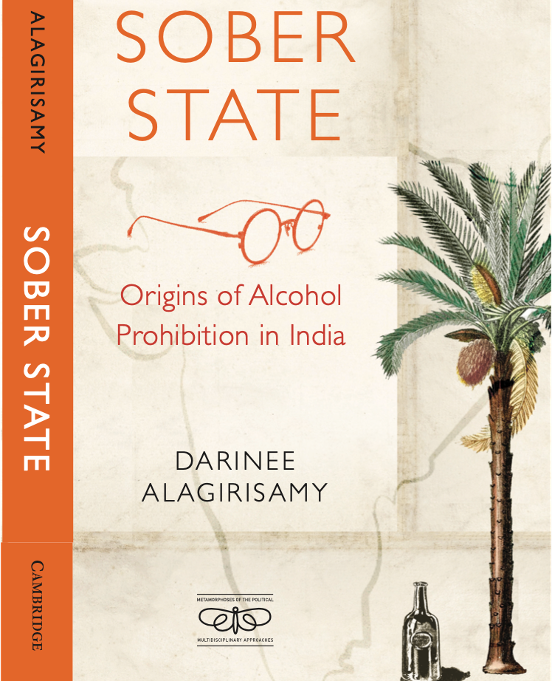
How does state power function across time? India’s constitutional commitment to alcohol prohibition provides a helpful case study. Having emerged as a product of broader engagements with the state, India’s history of banning alcohol bears the imprint of the tensions that brought the policy into existence. The talk traces this history, showing how prohibition’s constitutive contestations and negotiations have allowed it to endure, while simultaneously restricting its reach. It examines the interplay between democratic legitimacy and policy outcomes - highlighting, through prohibition’s development - a highly contingent exercise of state power. The discussion thus sheds light on wider patterns of governance in postcolonial democracies, illuminating how contestations over policy - shaped by the defining experience of anti-colonial struggle - impact the durability, boundaries, and very nature of state power over time.
Dr Darinee Alagirisamy (Deputy Head, SASP) is a historian of modern South Asia. Her research is broadly concerned with social movements and the state. The talk is based on her recently published book, Sober State: Origins of Alcohol Prohibition in India (Cambridge University Press, 2026). Dr Darinee received her MPhil in Modern South Asian Studies (Distinction) and PhD in History from Cambridge University, where she held the Gates Cambridge Scholarship and Holland Rose Studentship.