
Book Talk: Earth’s Amphibious Transformation. The History and Present of the Oceanic Anthropocene
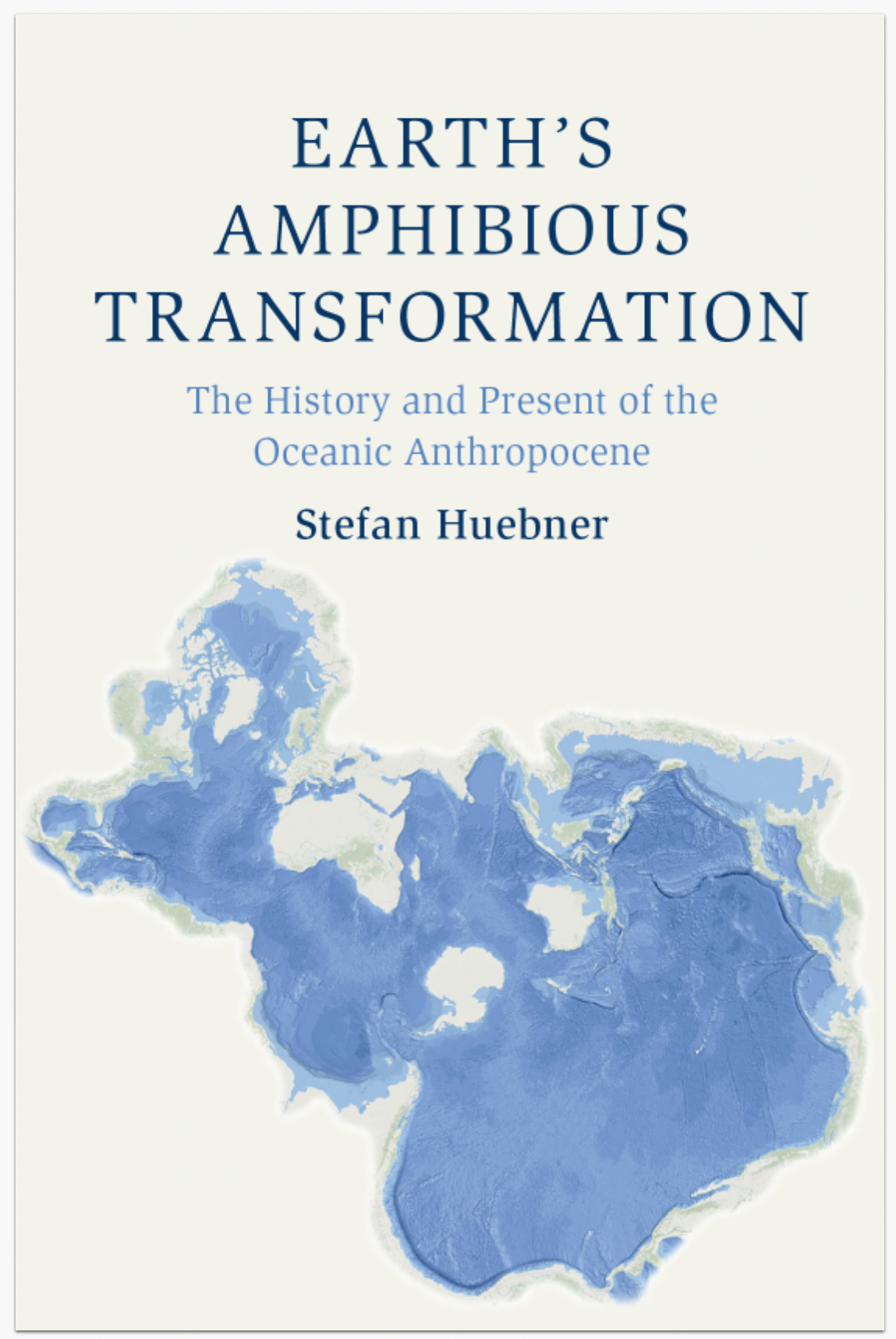
Since the mid-twentieth century, the world ocean has been profoundly reshaped by the Anthropocene, a new period defined by human-caused changes to planetary-scale processes in how Earth works. The book explores the overlooked oceanic dimension of the Anthropocene, emphasizing how its evolution has followed genuinely different trajectories of socioeconomic development and environmental degradation than those on land. It argues for a paradigm shift that recognizes the central role of many marine regions in this new period. The extension of the human habitat through artificial islands (floating structures, seabed-fixed structures, and offshore landfill) has granted vertical access to Earth’s different spatial layers—from the fossil fuels beneath the seabed to outer space. Earth’s amphibious transformation, driven by the growing number of artificial islands, compels us to reconsider the histories of sea level rise and climate change, but also of energy transitions, globalization, human-marine species interactions, and even floating cities and urbanization.
Dr. Stefan Huebner, a historian interested in oceanic and environmental topics, is Senior Research Fellow at the National University of Singapore’s Asia Research Institute and the President of the Society of Floating Solutions (Singapore). Recent articles were published in Climate Risk Management, Ocean and Coastal Management, ChannelNews Asia, and Journal of Global History. He also co-edited Oceanic Japan. The Archipelago in Pacific and Global History. His second monograph, on Earth’s Amphibious Transformation, will be released by Cambridge University Press in 2026. In 2019, he served as U.S. SSRC Transregional Research Fellow at Harvard University, where he was previously a Fulbright scholar in 2018.