
HBM Murphy and the early days of psychiatric epidemiology between colonial medicine and sociology (1950s Singapore)
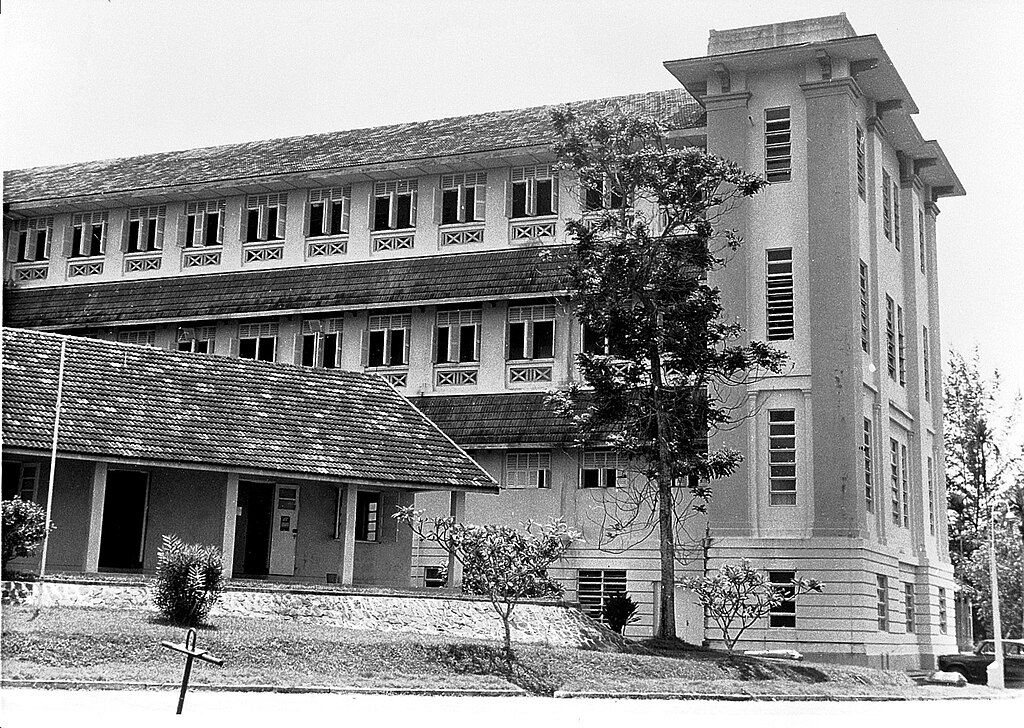
My presentation explores the emergence of psychiatric epidemiology as a hybrid field in the mid-twentieth century, through the understudied early work of HBM Murphy in colonial Singapore. Drawing on interdisciplinary methods from psychiatry, sociology, and public health, Murphy developed an approach to mental health research that both reflected and transcended the institutional boundaries of his time. Between 1952 and 1957, while serving as director of the newly established Student Health Service at the University of Malaya, he conducted empirical studies on anomie, juvenile delinquency, and mental disorders across Singapore’s multicultural population and communities. His research, rooted in statistical data collection and sociological analysis, contributed to the field of social psychiatry and to the early stages of development and formalization of psychiatric epidemiology. On the one hand, Murphy’s work is situated at the intersection of colonial medicine and social sciences. It illustrates the methodological bricolage characteristic of postwar cross-cultural psychiatry, where techniques from anthropology, psychometrics, and sociology were adapted to health contexts. On the other, Murphy’s use of the Durkheimian concept of anomie to examine adolescent behavior reveals both the theoretical ambitions and the political limitations of his project. While Murphy critiqued racism in North America, his Singapore research remained largely silent on the colonial structures shaping data, social organization and local policies in mental health. By revisiting his early contributions, this historical inquiry sheds light on new medical-scientific knowledge in the 1950s, psychiatric epidemiology, and invites a reexamination of how human and social sciences evolved in colonial and postcolonial contexts.
Emmanuel Delille (PhD) is a historian of science. He is currently an Associate Researcher at the Centre d’Archives en Philosophie, Histoire et Édition des Sciences (CAPHÉS, École Normale Supérieure, Paris) and at Centre Marc Bloch (CMB, Humboldt University, Berlin). He earned a doctorate in History at the École des Hautes Études en Sciences Sociales (EHESS, Paris) in 2008 with a dissertation on the history of the French medical encyclopaedia, the “Encyclopédie Médico-Chirurgicale” (EMC), between 1947 and 1977. One of his major interests is the history of psychiatry: the intellectual networks and comparative history between France, Germany, and North America—particularly Canada.