Silk Sericin-Based Biomaterials for Tissue Repair and Regeneration
Abstract
Regenerative medicine for trauma repair represents a critical demand globally, however it is limited by the lack of suitable biomaterials for tissue regeneration. To overcome this challenge, we have evaluated a series of biomaterials and uncovered that silk sericin, derived from silk cocoons, is a promising biomaterial for tissue regeneration. A novel LiBr extraction methodology has been developed and utilized for acquiring pure silk sericin with intact protein structures. Besides, physicochemical and biological properties of silk sericin have been comprehensively characterized to establish theoretical/technical foundations for its biomedical applications. Moreover, to address the clinical challenge of post-traumatic tissue and organ regeneration, we have elucidated mechanisms of sericin-mediated in situ tissue regeneration and developed a series of high-performance sericin-based tissue engineering approach to repair neural tissue, myocardium, skin, skeletal muscle and other types of trauma injuries. Clinical translation of sericin-based materials and devices may offer better therapeutic options for trauma patients and our findings may pave the way for the future clinical translation of sericin biomaterials.
Biography
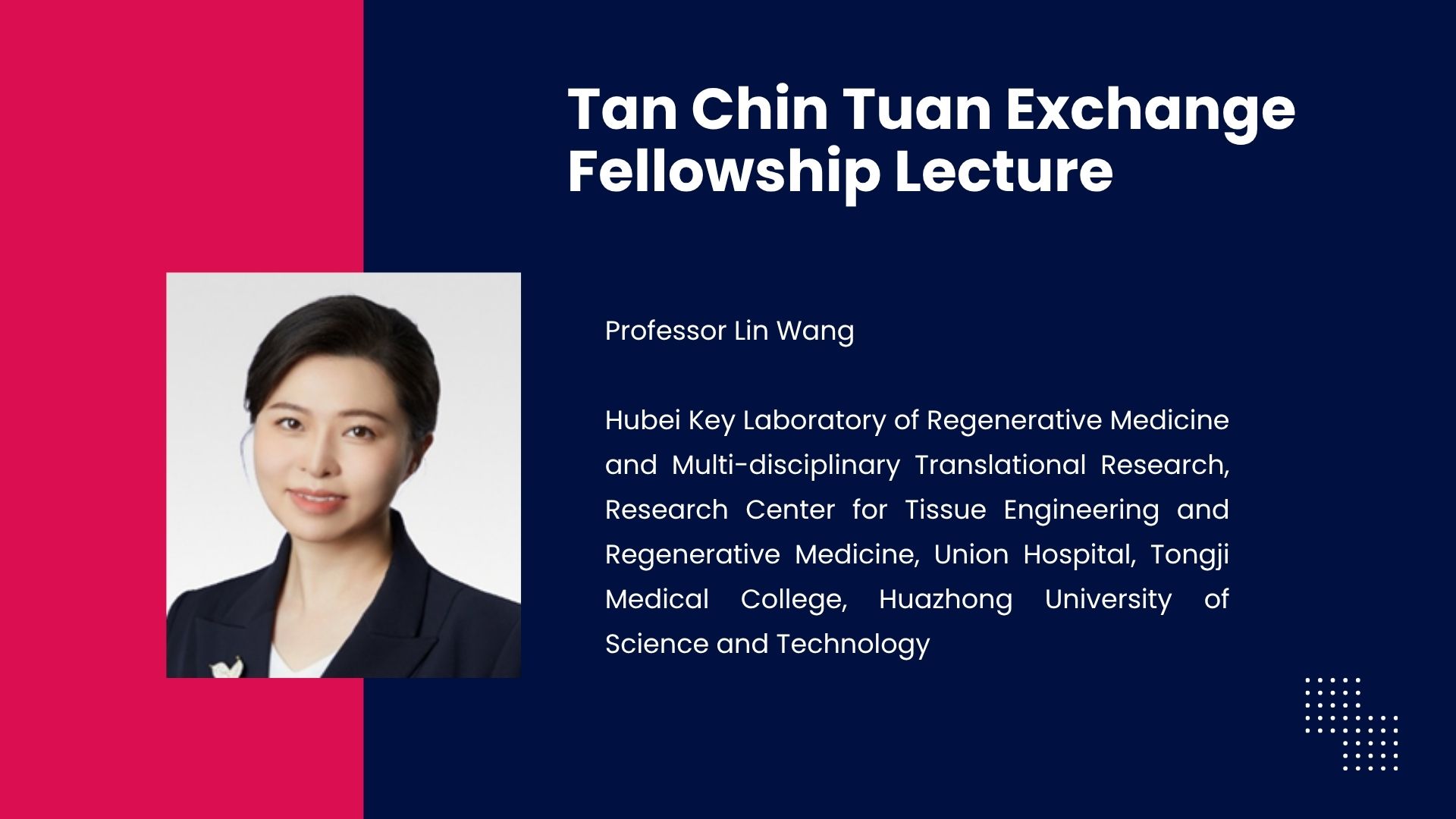
Prof. Lin Wang is the Director of the Research Center for Tissue Engineering and Regenerative Medicine, Hubei Key Laboratory of Regenerative Medicine and Translational Research, and the Department of Clinical Laboratory, Union Hospital, Tongji Medical College, Huazhong University of Science and Technology. She serves as Associate Editor of Science Advances, and Vice President of both the Chinese Medical Society of Tissue Repair & Regenerative Medicine and the Chinese Medical Doctor Association of Laboratory Medicine. Prof. Wang received her PhD from Brown University and completed her postdoctoral fellowship at Harvard University. She founded Central China’s first Research Center and Key Laboratory for Regenerative Medicine in 2011. Her pioneering work focuses on biomaterials-based tissue regeneration, cancer therapy, and laboratory medicine. She has published 180+ papers (e.g., Nat Biomed Eng, Adv Mater, Nat Commun, Biomaterials) and holds 41 invention patents. The honors that she received include the UNESCO “Women in Science Award” (2017), Yangtze River Scholar (2018), National Leading Talent (2019), Wu-Jieping Pharmaceutical Innovation Award (2018), and Outstanding Scientific Achievement Award (2023).